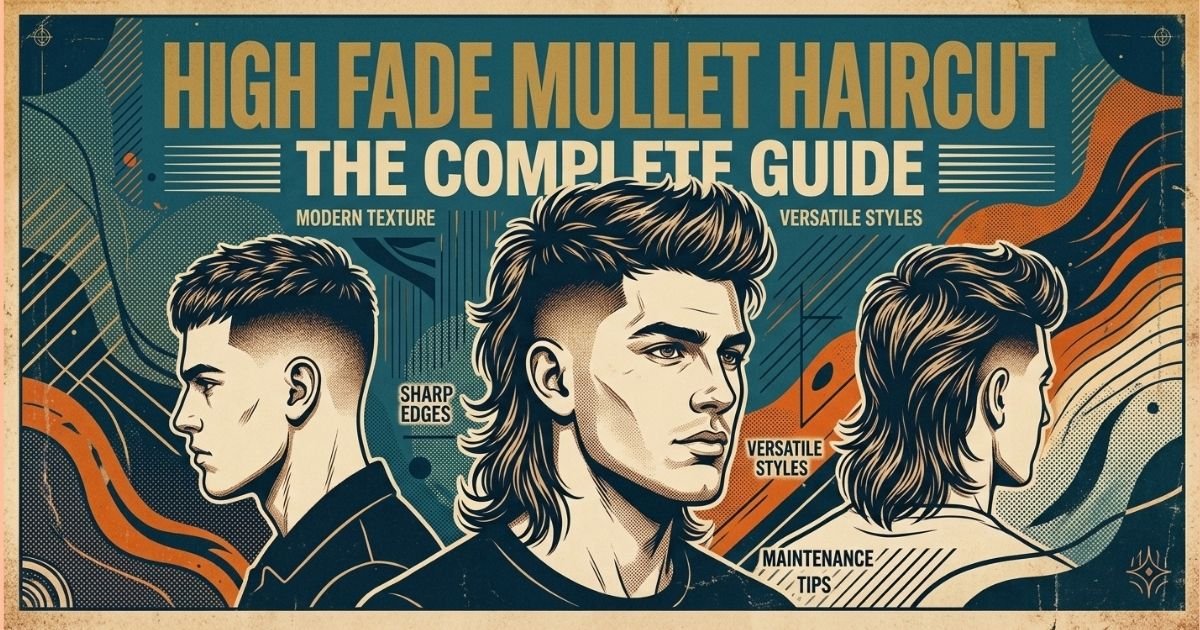
High Fade Mullet Haircut: The Complete Guide
The high fade mullet is one of the most popular haircuts for men entering 2026, and it’s no surprise. It has the rebellious look of a classic mullet, and it’s combined with a crisp, high-contrast fade that barbers can achieve with great accuracy. This cuts the edge without looking unkempt, and organizes without sacrificing the loose flow of the mullet style that made it so popular.
Whether you’ve been admiring barbershop photos and thinking to yourself, “yeah, this cut looks cool, but is it really high?” or you’ve been in a discussion with your barber about this cut and you’re still not sure how to get it looking cool, this guide is for you.
What Is a High Fade Mullet Haircut
A high fade mullet is a mullet that has a faded side that begins high on the head, typically at or above the temple, not near the ear or neckline. The hair transitions from long to almost skin level in a shorter, tighter area, rather than tapering down gradually. This provides a clear line of demarcation between the sides that are shaved and the longer hair on the crown and back.
The core mullet shape stays the same. Short on top and sides, noticeably longer at the back. What changes is how aggressive that side contrast looks. A high fade pushes the shaved or clipper cut section further up the head, leaving only a narrow band of longer hair running down the crown and into the nape.
This is what gives the high fade mullet its edge. It reads as more deliberate and more current than a plain, unfaded mullet, and it tends to photograph better because the contrast between short and long is so obvious from every angle.
High Fade vs Low Fade vs Mid Fade Mullet
| Fade Type | Where It Starts | Look | Maintenance |
|---|---|---|---|
| Low fade mullet | Just above the ear | Subtle, office-friendly | Low, can stretch to 5 or 6 weeks |
| Mid fade mullet | Around the temple | Balanced, visible contrast | Medium, around 4 weeks |
| High fade mullet | Above the temple, near the crown | Bold, maximum contrast | Higher, usually 2 to 3 weeks |
Not all mullet fades are created equal, and the height of the fade changes the entire personality of the cut. Here is a quick breakdown. A low fade barely registers as a fade from a distance. It keeps the sides tidy without making a statement, which is why it is often the safer pick for conservative workplaces. A mid fade sits in between. It carves out a visible line without going to the extreme. The high fade is the boldest of the three. It removes the most hair, creates the sharpest line, and leaves the longer sections looking even longer by comparison because there is so little hair left on the sides to compete with.
The tradeoff is regrowth. Because the fade line sits so high, new growth shows up fast. Most men with a high fade mullet are back in the chair every two to three weeks to keep the line crisp, while a low fade can often go five or six weeks before it starts to soften.
Who Should Get a High Fade Mullet
This cut is not universal, but it works for more people than you might expect.
Hair type. Thick, wavy, or curly hair pairs especially well with a high fade because the volume on top and at the back has more room to stand out against the closely shaved sides. Straight hair can absolutely work too, though it usually needs a bit of product to keep the top from falling flat.
Face shape. Round faces tend to benefit the most, since the sharp vertical lines of a high fade add angles and make the face look longer. Oval and oblong faces can wear almost any version of this cut comfortably. Square faces can still pull it off, but softening the top with a curtain fringe or looser texture helps balance out a strong jawline.
Lifestyle. If you do not mind frequent trims and you like a haircut that looks intentional rather than grown out, the high fade mullet fits well. If you would rather visit the barber every couple of months, a low or mid fade will serve you better long-term.
Types of High Fade Mullet Haircuts
The high fade works as a base for several different mullet variations. Here are the most requested ones right now.
High Fade Burst Mullet
Instead of a straight fade line running up the side, the burst fade curves around the ear. This rounds off the contrast and blends more naturally into the longer back section. It is a favorite for men who want the sharp look of a high fade without the harsher, straight-edged line.
High Skin Fade Mullet
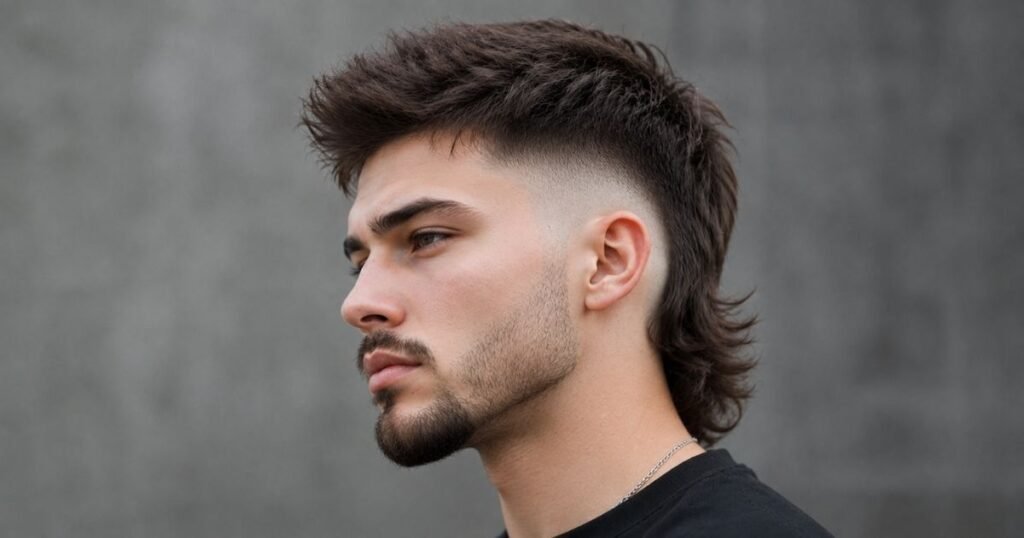
This version fades the whole way down to the skin level and then blends up. It is the most extreme among the group, and the greatest contrast to the longer hair. It is perfect for men who wish their mullet to look assertive, especially for thick or curly top hair.
High Fade Wolf Cut Mullet
The wolf cut adds to the heavy layering and volume. When combined with a high fade, you’ll achieve the ultimate contrast between a shaggy, voluminous top and razor-sharp sides. This style is more of a casual look and is best suited for thicker or wavy hair that can support the layered texture.
High Fade Mullet With Beard
A full or textured beard helps to soften the edges of a high fade and gives the lower portion of the face some texture. The combination has become one of the most frequently used by barbers, as the beard provides the foundation and prevents it from being too flat.
High Fade Mullet With Curtain Fringe
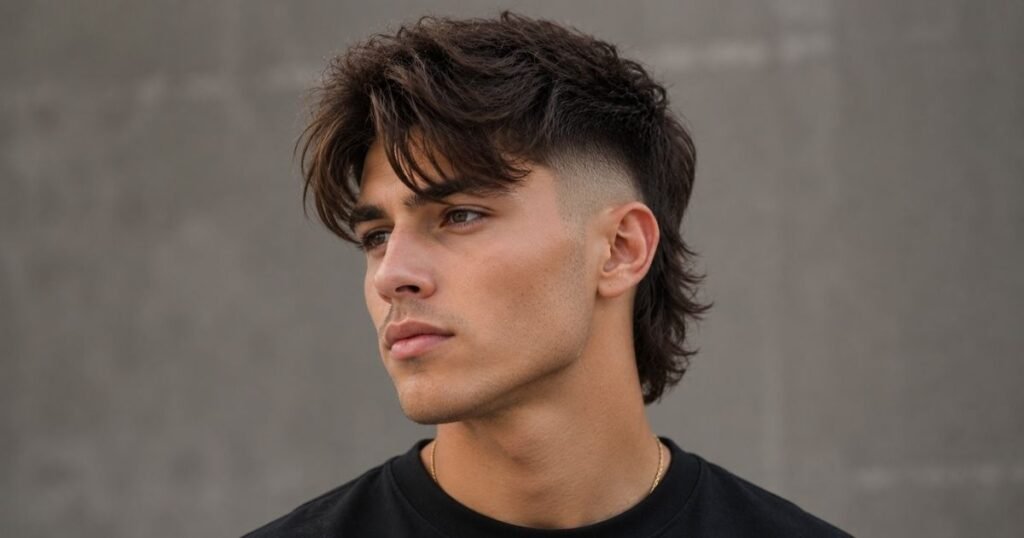
A center-parted fringe adds softness to the front of the cut while the high fade adds definition to the sides. It’s a popular pairing due to the Korean and K-pop-inspired styling, and the cut has a more refined, less aggressive look.
How to Ask Your Barber for a High Fade Mullet
Walking in and simply saying “give me a mullet” leaves too much room for interpretation. Barbers work from specifics, so it helps to be clear about three things.
- Fade height. Say you want the fade to start above the temple, closer to the crown. Some barbers use the terms high, mid, and low, so using that language directly helps avoid confusion.
- Back length. Decide roughly how long you want the back section. A subtle drop of two to three inches reads as a modern, wearable mullet, while anything longer starts to feel more dramatic.
- Top texture. Mention whether you want the top left long and layered for a shaggy finish, or kept shorter and more structured for a cleaner look.
Bringing a couple of reference photos also goes a long way. Fade height and back length can look completely different depending on the barber’s interpretation of “high” or “long,” so a picture removes the guesswork.
How to Style a High Fade Mullet
It is the fade that does most of the visual work, but the top and back must be attended to as well to make it look intentional and not accidental. The following is an easy routine that is suitable for most hair types.
- Dry hair with a towel, but not completely.Dry hair with a towel, but not completely dry.
- Spray a little volumizing mousse or texture spray at the roots.
- Use a round brush and blow-dry the top part upwards to create lift.
- Allow the back part to air-dry naturally, or lightly air-diffuse for curly or wavy hair, to retain the natural fall.
- Apply a small amount of texture clay or light sea salt spray to define and separate strands.
After a few minutes, this whole process can be completed in about five minutes. The trick is to develop volume at the root level and leave the back to its own devices. Too much product in the back section will often create a weighed-down look rather than a textured look.
Maintenance and Upkeep
Regrowth is noticeable earlier than a low or mid fade since the fade sits high on the head. The majority of barbers advise getting a touch-up every 2 or 3 weeks to maintain the line. The fade begins to fade into a more tapered look if it’s allowed to grow out longer than this.
Some habits have been retained between trims to keep the style looking fresh.
- Wash hair 2-3 times a week, condition mid-lengths and ends; the back of the hair dries out quicker than the sides.
- Apply a light hold product to the top of the hair every day, not a thick wax that will give fine hair a greasy appearance.
- If you have a skin fade in particular, try to get a beard trimmer touch-up at home between barber visits to ensure that the line doesn’t look overgrown.
A satin pillowcase can also help minimize friction overnight, and this means that the longer back section will not tangle as much or frizz.
Explore More: Silky Hairstyles for Men: The Complete Guide to Cuts, Styling, and Care
Pros and Cons of the High Fade Mullet
Every haircut comes with tradeoffs, and the high fade mullet is no exception.
What works in its favor. It creates a bold, memorable silhouette. It photographs well thanks to the strong contrast. It works across straight, wavy, and curly hair types, and it gives barbers room to get creative with burst fades, skin fades, and layering on top.
What to consider before committing. It needs frequent trims to stay sharp, usually every two to three weeks. It is a more dramatic look than a low or mid fade, which may not suit every workplace. And because the sides are cut so short, growing it out into a different style later takes patience.
If you are unsure whether you want to commit, starting with a mid fade and working your way up to a high fade at your next appointment is a reasonable way to test the waters.
High Fade Mullet for Work and Everyday Life
A frequently asked question is if this cut is too revealing to wear at work. The truth is, it is dependent on your business and your work culture.
Hospitality, fitness, and many casual offices look professional and up to date with a high fade mullet. When paired with a clean beard line or simply keeping the top cut short, it looks more put together.
For more conservative or client-oriented positions, a mid or low fade mullet is a more conservative option, as it provides the same overall shape but with a more subtle side profile. If you are employed at a place that has a formal workspace, and you still want to go with the trend, consult your barber for a shorter back part and the high fade. It’s better to keep the back closer to the collar than to let it glide past it, as this will sound more polished.
The high fade mullet is as flexible as haircuts can be outside of work. It will look great from the side of the road in a cap and t-shirt, or when it gets dressed up in a collared shirt and a neat beard.
Conclusion
The high fade mullet is no fad. It provides a real cut with a style and a modern take on the signature contrast. Thick or curly hair will make the look even more interesting, but straight hair will also do the trick, just with some product and blow-drying.
The tradeoff for that bold look is upkeep. If you want to maintain a crisp fade line, make an appointment with your barber every 2-3 weeks. If that’s too much commitment for you right now, a mid or low fade version will provide you with the same silhouette but with a less demanding maintenance routine.
Either one will do, but the information is what matters. Talk to your barber in detail about the fade height, back length, and amount of texture you want on top, and have a picture to show. The key to a great high fade mullet is blending and a barber who knows exactly what you’re looking for.
Frequently Asked Questions
What is the Frequency of Trimming a High Fade Mullet?
Expect a touch-up every 2-3 weeks. Since the fade is in the higher part of the head, it is easier to see regrowth than with a low or mid fade, and shorter intervals between visits maintain the sharpness of the line.
Too Bold to Work a High Fade Mullet?
It is specific to your workplace. It is generally acceptable in creative and casual environments, but may be more appropriate for a mid or low fade version in more formal or client-facing roles. A shorter back section and a tidied top section also make it appear more polished.
Can you use a High Fade Mullet on Curly Hair?
Yes, and it can look even better than on straight hair. Since the sides are closely faded, the natural curls or waves provide a better contrast to the sides, making the cut more defined and detailed.