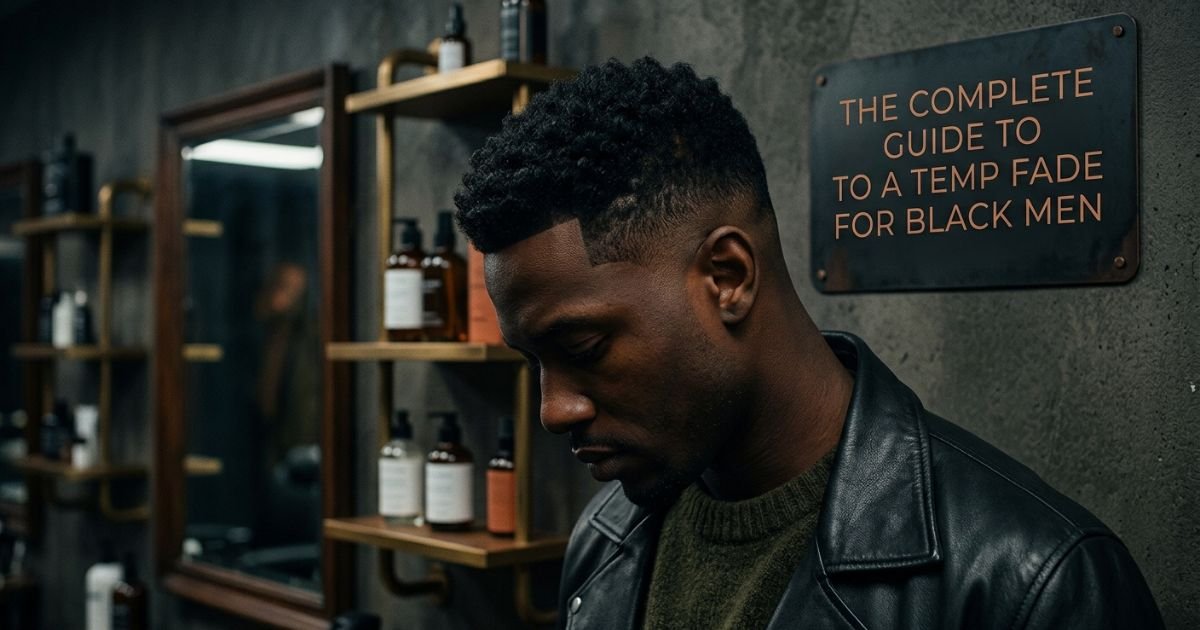
The Complete Guide to a Temp Fade for Black Men
Temp fade for Black men: a complete guide to styles, hair texture pairings, barber tips, maintenance, and cost. Find the right temp fade for your look today.
A temp fade, short for temple fade, is one of the most requested haircuts in barbershops across the country. It is clean, versatile, and works with almost every hair texture, from tight coils to loose curls. If you want a haircut that looks sharp for weeks and pairs well with any style on top, the temp fade is worth understanding in detail before your next barber visit.
This temp fade for Black men covers what a temp fade actually is, the most popular variations, how to choose one based on your hair texture and face shape, how to ask your barber for it, and how to keep it looking fresh between visits.
What Is a Temp Fade?
A temp fade is a haircut where the hair is faded specifically around the temple area, the small section near your hairline just above the ears. Unlike a full fade that blends all the way from the crown down to the skin, a temp fade focuses the blend near the front hairline while leaving more length on the crown and back.
The result is a rounded, clean line that frames the face without shortening the entire head. This makes it a favorite for men who want a defined hairline but still want to keep volume on top, whether that top is an afro, waves, curls, or a short crop.
Temp fades are often combined with a low or mid fade on the sides and back for a more complete look. On their own, they work as a subtle detail that sharpens up almost any hairstyle.
Temp Fade vs Taper Fade vs Full Fade
People often mix these terms up, so here is a simple breakdown.
| Term | What It Means | Best For |
|---|---|---|
| Temp Fade | Fading focused around the temples and hairline only | A clean frame without shortening the whole head |
| Taper Fade | Gradual shortening from top to sides, some length left at the perimeter | A softer, natural transition |
| Full Fade | Hair blends all the way to the skin from a higher point | A sharper, more dramatic contrast |
A temp fade can be paired with any of these. You can have a low taper fade with temple detailing, or a skin fade with a sharp temple line. It is more of an accent than a standalone fade style.
Popular Temp Fade Styles for Black Men
Temp Fade with Afro
This pairs a full, rounded afro on top with a clean temple fade underneath. The volume up top contrasts sharply with the tight blend near the hairline, giving the whole cut structure without flattening the natural texture.
Temp Fade with Waves
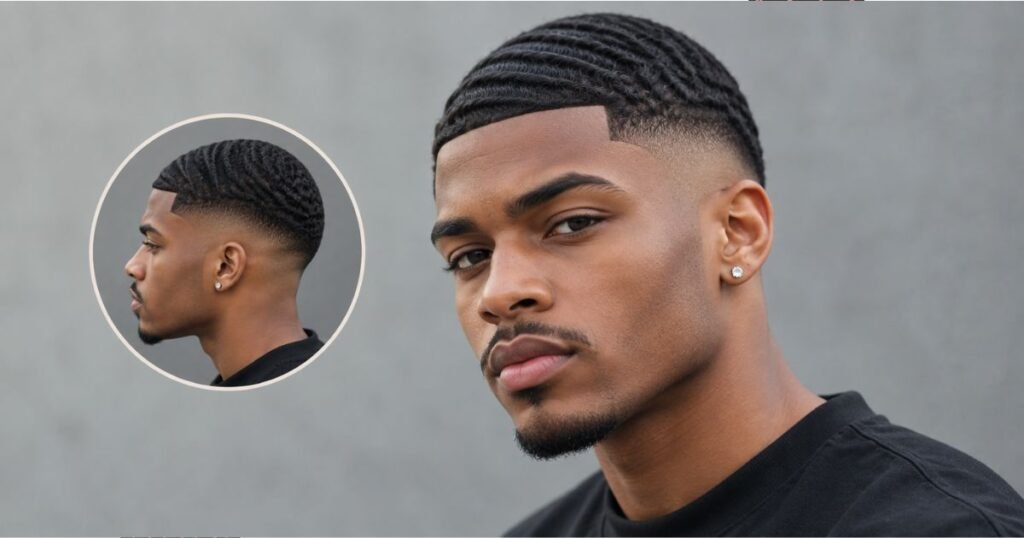
For men working on 360 waves, a temp fade keeps the sides and hairline crisp while the waves stay the focus. Barbers usually keep the fade low so it does not distract from the wave pattern.
Temp Fade with Line Up
A line up, sometimes called an edge up, sharpens the hairline into a straight or slightly curved edge. Combined with a temp fade, this gives a barbershop-fresh finish that lasts through the first week better than a fade without a line up.
Temp Fade with Curls
Curly hair on top paired with a temp fade is one of the more requested combinations right now. The curls stay defined and bouncy while the temple area stays neat, which creates a nice balance between texture and precision.
Temp Fade with Beard
Pairing a temp fade with a groomed beard gives a more structured, mature look. Ask your barber to connect the fade and the beard line so both transitions match up cleanly.
High Top Temp Fade
A high top keeps length concentrated at the top and back while the temp fade handles the front. This is a classic look that has stayed popular for decades and still gets requested often.
Mohawk Temp Fade
A strip of longer hair runs down the center while the sides are faded, with the temple detail adding extra sharpness near the front. This works well for men who want something bolder than a standard fade.
Temp Drop Fade
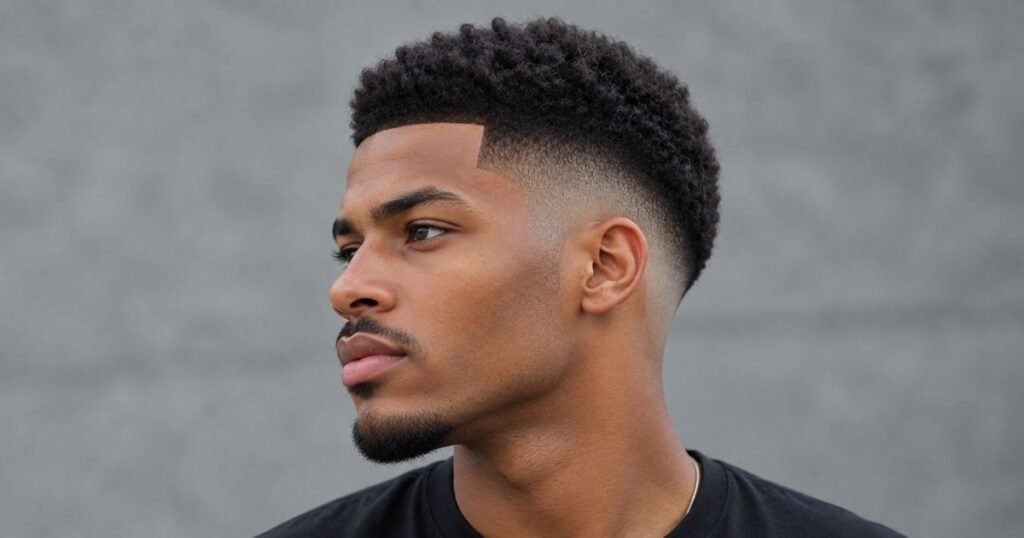
Instead of staying level, the fade curves downward behind the ear. Paired with temple detailing, this creates more visual interest and works especially well with shorter styles on top.
Explore More: Fringe Haircut Men: The Complete Style and Maintenance Guide
Choosing a Temp Fade Based on Your Hair Texture
Not every version of this haircut sits the same way once it grows out, because texture changes how hair falls and holds shape.
| Hair Texture | Recommended Temp Fade Pairing | Why It Works |
|---|---|---|
| 4A to 4B coily | Afro with temp fade | Keeps volume while framing the face |
| 4C tightly coiled | Low fade with temp detail | Reduces bulk, easier to style day to day |
| Curly (3A to 3C) | Curls on top with temp fade | Curls stay defined without extra weight |
| Wavy | Waves with temp fade | Highlights the wave pattern with a clean edge |
| Straight or fine | Textured crop with temp fade | Keeps the top from looking flat |
Which Temp Fade Suits Your Face Shape
Face shape has more influence on how a haircut looks than most people expect.
- Round face: More height on top balances the roundness, so an afro or high top with temp fade tends to work well.
- Square face: Softer, curlier tops help ease a strong jawline. A curly temp fade is a good match.
- Oval face: Nearly any version works here, which makes it the easiest face shape to style for.
- Long face: Keep more width at the sides and less height on top. A low, simple temp fade is usually the safer choice.
- Diamond face: Pairing the temp fade with a beard helps soften angular cheekbones.
How to Ask Your Barber for a Temp Fade
Communication makes the biggest difference in whether you walk out happy with the cut. Here is a simple way to explain what you want.
- Say clearly that you want a temp fade, and mention whether you want it paired with a low, mid, or high fade on the sides.
- Describe how much length you want left on top, whether that is a full afro, a few inches of curls, or a short crop.
- Mention your hair texture so the barber knows how the top section will sit once it is cut and styled.
- Bring a reference photo if possible. Even an approximate match helps avoid confusion, since temple fades vary a lot in how tight or subtle they look.
- Ask how often you will need touch-ups based on how fast your hair grows.
Maintaining a Temp Fade for Black Men
A temp fade needs regular upkeep because the temple area grows out faster than people expect, and once it does, the clean line starts to blur.
Book touch-ups on a schedule. Most men need a visit every two to three weeks to keep the temple line sharp. Waiting past four weeks usually means the barber has to work harder to fix the blend.
Use lightweight products. A matte pomade or light-hold cream styles the top without adding shine that makes new growth more obvious. Heavy, greasy products also tend to clog pores near the hairline.
Protect your hair at night. Sleeping on a standard cotton pillowcase creates friction that dries out hair and roughens the fade line. A satin or silk cap, du-rag, or pillowcase reduces this significantly.
Keep the scalp moisturized. A light, non-comedogenic scalp oil applied a few times a week prevents the dry, ashy look that makes even a fresh fade appear unkempt.
Do not touch up the fade line yourself. Cleaning up stray hairs at the neckline is fine at home, but the actual blend should stay with your barber. DIY attempts on the temple area often damage the gradient and make the next professional cut harder.
How Much Does a Temp Fade Cost
Pricing depends heavily on location and barbershop tier.
| Shop Type | Typical Price Range |
|---|---|
| Budget or walk-in salon | $15 to $28 |
| Standard independent barbershop | $25 to $45 |
| Premium or upscale barbershop | $45 to $75 and up |
| Temp fade with beard trim | $50 to $90 and up |
Because the temple area grows out fairly quickly, it helps to think about the yearly cost rather than just the per-visit price. A $35 cut every three weeks adds up to roughly $600 a year, which is worth factoring in when picking a regular barber.
Common Mistakes to Avoid
Even a well-done temp fade can look worn out fast if a few habits are ignored.
- Waiting too long between appointments, which lets the temple line grow out and blur.
- Using heavy or greasy products that dull the fade and can irritate the skin near the hairline.
- Skipping nighttime hair protection, which leads to frizz and a rougher-looking fade within days.
- Giving vague instructions to the barber instead of specifying fade height and top length.
- Over-washing with harsh shampoo, which dries out the scalp and makes curls harder to manage.
Conclusion
A temp fade is a small detail that makes a big difference. It frames the face, works with nearly every hair texture, and pairs well with everything from a full afro to a tight curl pattern. The key to keeping it looking sharp is staying consistent with touch-ups, using the right products, and being clear with your barber about what you want.
Whether you are trying a temp fade for the first time or refining a style you already wear, understanding how it works and how to maintain it will help you get more value out of every barbershop visit.
Frequently Asked Questions
What is the difference between a temp fade and a regular fade?
A temp fade focuses the blend specifically around the temple and hairline, while a regular fade blends the entire side and back of the head down to the skin. A temp fade is often combined with a low or mid fade for a more complete look.
How often should I get a temp fade touched up?
Most men need a touch-up every two to three weeks. Because the temple area grows out faster than other sections, waiting longer than a month usually means the line has to be reshaped rather than simply refreshed.
Does a temp fade work with natural hair like afros or curls?
Yes. A temp fade is actually one of the more popular choices for natural hair because it adds a clean edge near the face without requiring any change to the length or texture on top.
Can I maintain a temp fade at home between barber visits?
You can clean up stray hairs at the neckline and use good products to keep the top looking fresh, but the temple blend itself is best left to a professional. Attempting it yourself often ends up damaging the line.