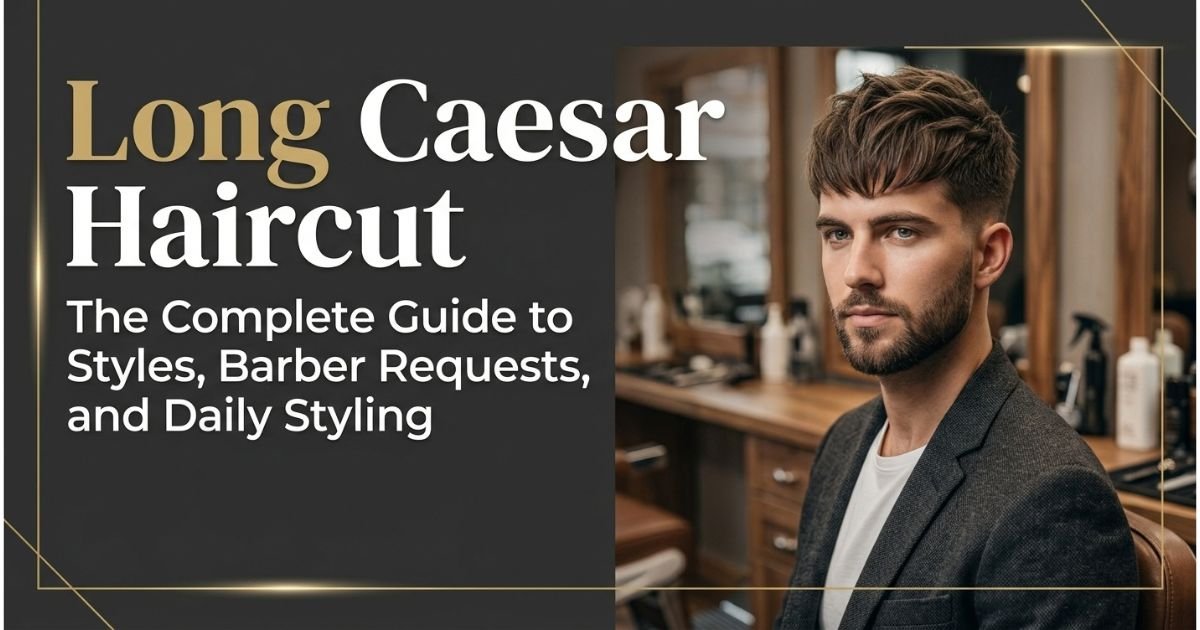
Long Caesar Haircut: The Complete Guide to Styles, Barber Requests and Daily Styling
The classic Caesar is short, neat, and almost military in its tidiness. The long Caesar haircut keeps the same forward fringe but leaves enough length on top to actually play with.
That extra length is why so many guys are asking for it. It looks sharp on a Monday morning and relaxed on a Saturday night, and it doesn’t demand a salon visit every two weeks.
This guide covers what the cut is, who it suits, the best variations, the exact words to use in the barber’s chair, and how to style it so it looks intentional rather than overgrown.
What Is a Long Caesar Haircut?
A long Caesar is a Caesar cut with extra length on top, usually somewhere around 3 to 4 inches, while the sides and back stay much shorter. The fringe still falls forward onto the forehead, but it is softer and more textured than the razor-straight line of the original.
The traditional Caesar sits around 1 to 2 inches all over. Once you push the top beyond that, you gain movement, volume, and a lot more styling options.
Think of it as the same haircut with the dial turned toward relaxed.
Where the Cut Comes From
The name goes back to Julius Caesar, who was often shown with short hair combed forward. Plenty of people believe he did it to hide a thinning hairline, and that practical origin is part of why the cut still works for guys with a receding front.
It has bounced in and out of fashion ever since. Actors wore it through the 90s and early 2000s, and today’s version is longer and less rigid than those earlier ones.
Long Caesar vs Classic Caesar vs French Crop
These three get mixed up constantly, so here is the simple breakdown.

Classic Caesar: Short all over, with a straight, blunt fringe. Very clean, very little styling.
Long Caesar: More length on top, a textured or slightly choppy fringe, and shorter sides. Takes product and shows more personality.
French crop: Usually faded or tapered on the sides with a short, blunt fringe. It is closer to the classic Caesar than to the long version, and the sides are cut tighter.
If you want something you can push around with your fingers, the long Caesar is the one.
Who Suits a Long Caesar Haircut?
Almost everyone can wear it, but a few details change how it should be cut. Getting these right is what separates a good result from a “why does my head look like this” result.
Best Face Shapes
Oval faces carry nearly any version without trouble. Square and rectangular faces also do well, because the fringe softens a strong jaw and shortens a long forehead.
Round faces can wear it too, but ask for height and texture on top rather than a heavy flat fringe. Flat fringes add width, and you want to add length instead.
If you have a very long or narrow face, keep the fringe thick and leave the sides a little fuller so the shape doesn’t stretch even more.
Hair Types
Straight hair: The easiest to cut and the hardest to make look textured. Fine straight hair can go flat, so you will need a light powder or sea salt spray.
Wavy hair: Probably the best match. The natural movement does half the styling for you.
Curly hair: Works well when the barber cuts the top slightly shorter than you expect, because curls spring up and look shorter once they dry. Leave the length at 3 inches, and it may sit at 2.
Thin or fine hair: Go for a choppy, point-cut fringe so the hair looks fuller. Avoid very heavy layers.
Receding Hairlines and Thinning Hair
The long Caesar is friendlier to a receding hairline than most styles, because the forward fringe covers the corners. The trick is to keep the fringe slightly uneven rather than perfectly straight. A razor-straight line draws attention to exactly the spot you are trying to soften.
Long Caesar Haircut Variations Worth Trying
The base cut stays the same, but the sides change everything. Here are the versions barbers get asked for most.
Long Caesar With a Low Fade
The fade starts near the ears and neckline and stays subtle. This is the safest choice for the office and for anyone trying the style for the first time.
Long Caesar With a High Fade
The sides drop to skin higher up the head, which creates strong contrast with the long top. It looks bold and sharp, but it grows out quicker, so expect to book more often.
Long Caesar With a Burst Fade
A burst fade curves around the ear in a rounded shape and leaves the back longer. It is a nice option if you want to keep some length at the nape, and it pairs well with a longer fringe.
It also suits guys who like a bit of a modern, slightly rougher look. If you are choosing between fades, the burst fade is the one that changes the outline of your head the most.
Long Caesar With a Taper
A taper is gentler than a fade. The hair simply gets shorter toward the neckline and around the ears, without dropping to skin. It reads as polished and professional.
Textured Long Caesar
Your barber cuts into the ends of the fringe to create small notches and uneven lengths. The result has natural separation, which hides cowlicks and looks great with matte clay.
Messy Long Caesar
This one needs enough length to look like you just got out of bed, on purpose. Style it with your fingers and a bit of paste, and leave the fringe uneven.
Curly Long Caesar
The fringe becomes a soft curl that sits on the forehead. A fade on the sides keeps the whole thing from looking too heavy.
Long Caesar With a Beard
A longer top and a beard are a natural pair. Keep the beard line clean and blend the fade into it so the whole shape looks connected.
Side-Swept Long Caesar
Instead of pushing everything straight forward, you sweep the fringe slightly to one side. It gives a bit more formality and works well if you have a strong parting direction already.
How to Ask Your Barber for a Long Caesar Haircut
This is where most people go wrong. Saying “Caesar cut” to ten different barbers can give you ten different haircuts, because the length depends on the day and the person.
Be specific about three things: the top, the sides, and the fringe.
Here is a script you can almost read word for word:
“I want a long Caesar. Leave about 3 to 4 inches on top, cut the fringe forward, and keep it a bit uneven, not blunt. Take the sides with a low taper (or low fade), and keep the neckline natural.”
Then add whatever applies to you:
- If you have a cowlick, say where it is.
- If your hair is curly, ask the barber to cut it dry or to account for shrinkage.
- If you want a fade, say low, mid, or high, and whether you want it to reach the skin.
Bring a photo, but make sure it is someone with similar hair texture. A picture of straight, thick hair won’t help if your hair is fine and wavy. Also tell the barber if you plan to grow it longer, since that changes how much they leave at the front.
How to Style a Long Caesar Haircut
The good news is that this takes about three minutes once you know the routine.
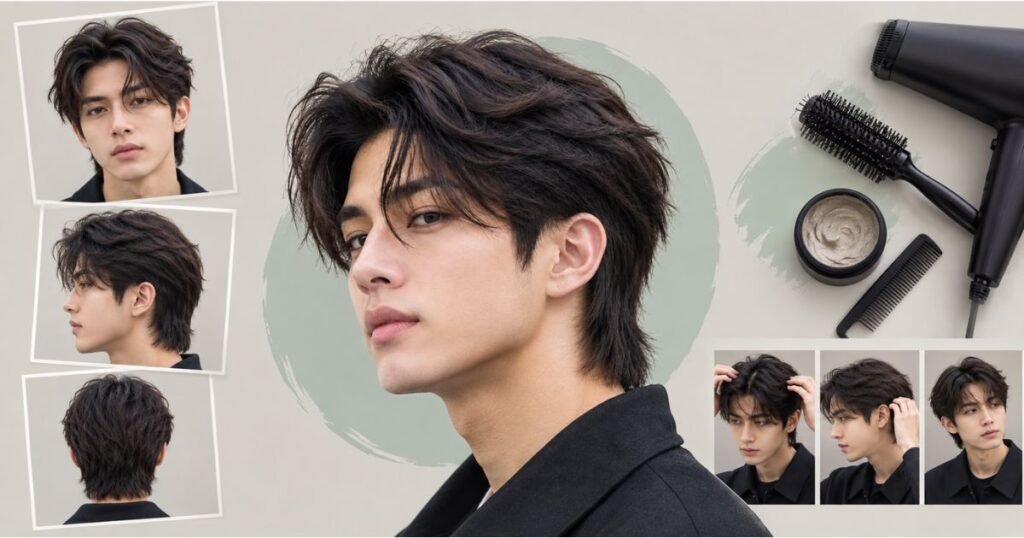
Step-by-Step Styling
- Start with damp hair. Towel-dry until it is no longer dripping. Styling on soaking hair makes products slide off.
- Blow-dry forward. Use medium heat and brush the fringe toward your forehead. This sets the direction before any product goes in.
- Use a small amount of product. A pea-sized portion of matte clay or paste is plenty. Warm it between your palms first.
- Work it through from the back. Start at the crown and move forward. Finish at the fringe with whatever is left on your fingers.
- Shape the fringe. Pinch and separate the ends for texture, or comb them flat for a cleaner finish.
Which Product Should You Pick?
Matte clay: Best all-rounder. Holds well without looking greasy.
Sea salt spray: Great for fine or straight hair that needs grip and body.
Light cream or curl cream: Better for wavy and curly hair, because it controls frizz without stiffening.
Pomade: Only if you want a shiny, combed look. It can make a long Caesar look heavy.
One tip most guides skip: if your fringe keeps lifting at the center, wet that spot and blow-dry it flat with a brush before adding product. The lift is almost always a cowlick, and heat trains it better than hold does.
How Often Should You Get It Trimmed?
The sides decide your schedule. With a fade, you will usually want a touch-up every 2 to 3 weeks to keep the contrast crisp. With a taper or no fade, you can stretch it to 4 to 6 weeks.
The top is more forgiving. A long Caesar can sit for several weeks and simply look a bit messier, which suits the style anyway.
Growing Into a Long Caesar
If you are starting from a short crop, give it around 2 to 3 months. Hair grows roughly half an inch a month, so you need patience to reach 3 to 4 inches on top.
The awkward stage usually hits in the middle. Ask your barber to keep cleaning up the sides and neckline during this time, so the top can grow without the whole head looking untidy. That one habit makes the wait much easier.
Explore More: Low Taper Fade for Kids & Boys: Styles, Age Guide and Care Tips
Common Mistakes to Avoid
Cutting the fringe too short. Hair looks longer wet than dry. If the barber cuts it to your eyebrows while wet, it may sit well above them once it dries. Ask for it to be left a little longer than you think you need.
Asking for a blunt fringe. A razor-straight line looks stiff on a long Caesar. Texture is what makes it modern.
Using too much product. Heavy gel or wax turns the fringe into a solid block. Less is better.
Ignoring your hair direction. If your hair grows away from the forehead, forcing it forward every day is a fight. Tell the barber and let them cut with the growth.
Skipping the neckline. A long top with a messy neck looks unfinished. A tidy neckline keeps it sharp.
Conlusion
The long Caesar works because it is easy to live with. You get a clear shape, a forgiving fringe, and enough length to change your look without changing your haircut.
Start with the details that matter: a clear length on top, a texture request for the fringe, and a fade level you are comfortable with. Bring a reference photo that matches your hair type, and you will walk out with something that actually looks like the picture.
Give it a few weeks to settle, adjust the product you use, and it will quickly become the cut you stop thinking about.
Frequently Asked Questions
How long should a long Caesar haircut be?
The top is usually 3 to 4 inches, compared with 1 to 2 inches for a classic Caesar. The sides and back stay short, using a taper or fade.
Does a long Caesar haircut work for curly hair?
Yes, and it often looks great. Curls tighten as they dry, so ask the barber to cut the top a little longer than the final length you want.
Is the long Caesar haircut good for thinning hair?
It can be. The forward fringe covers the front and temples, and a textured, uneven finish hides thinning better than a perfectly flat line. Avoid heavy products, which can separate the hair and show the scalp.