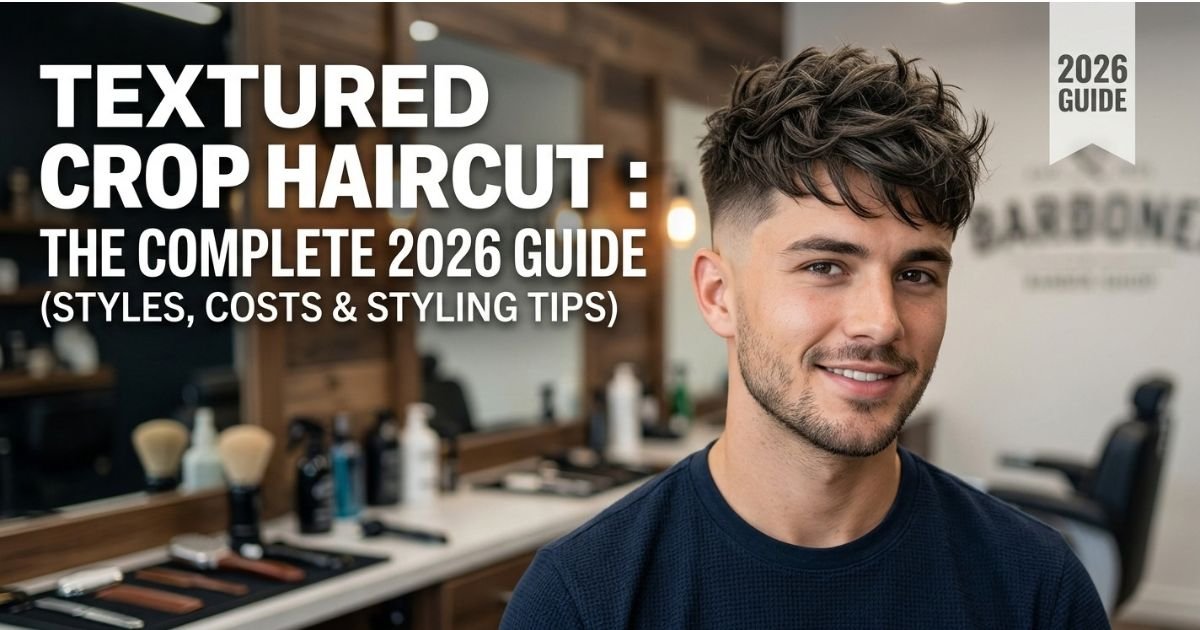
Textured Crop Haircut: The Complete 2026 Guide (Styles, Costs & Styling Tips)
If you’ve been scrolling through barbershop photos lately, you’ve probably noticed the same cut showing up over and over: short, faded sides paired with a choppy, piecey top. That’s the textured crop haircut, and it’s currently one of the most requested styles for men, for good reason.
It works on almost any hair type. It doesn’t demand twenty minutes of styling every morning. And it looks intentional even on the days you barely touch it. This guide covers everything you actually need to know before your next barber appointment: what the cut really is, the most popular variations, how to style it at home, what it costs to maintain, and the mistakes that make it look sloppy instead of sharp.
What Is a Textured Crop Haircut, Exactly?
A textured crop is a men’s haircut with short, faded or tapered sides and a longer top that’s cut using point-cutting or razor techniques. That cutting method removes weight from inside the hair strand rather than just trimming the ends, which is what creates that choppy, separated look instead of a flat, blocky one.
The front usually falls as a fringe, anywhere from mid-forehead down to just above the eyebrows. Behind that fringe is where the real texture lives, in the crown and mid-section, where the layers create movement and lift.
A lot of guides skip this detail, but it matters: the fringe and the crown aren’t styled the same way. The fringe tends to sit a little heavier and stays close to the forehead. The texture and separation happen further back. If your barber tries to chop texture right into the fringe itself, it usually ends up looking thin and messy instead of deliberate.
Textured Crop vs. French Crop vs. Crew Cut
People mix these up constantly, so here’s the quick breakdown.
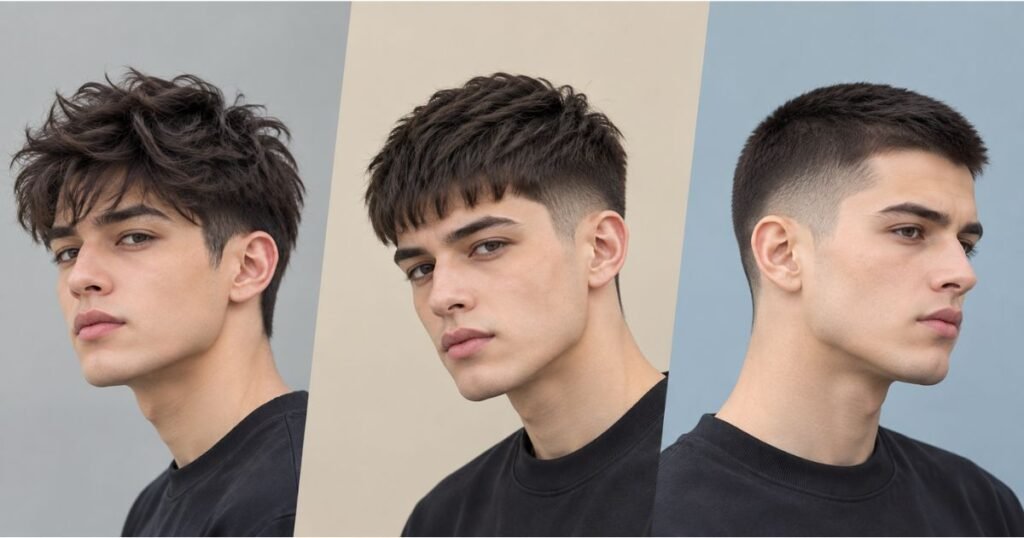
Textured crop: Soft, piecey fringe that falls in loose sections. Choppy, layered top. Reads relaxed and lived-in.
French crop: A blunter, straighter fringe line that cuts more definitively across the forehead. The top is still textured, but the fringe is the focal point, and it looks sharper and more structured than a textured crop.
Crew cut: Much shorter on top, usually under an inch, with hair that stands up rather than falls forward. No fringe to speak of. Lower maintenance but far less styling flexibility.
If you’re choosing between a textured crop and a French crop, think about your hairline. A blunt French crop fringe does a better job of visually covering a receding hairline because it creates a solid horizontal line. A textured crop is the more versatile, everyday option.
Popular Textured Crop Variations
1. Classic Textured Crop with a Mid Fade
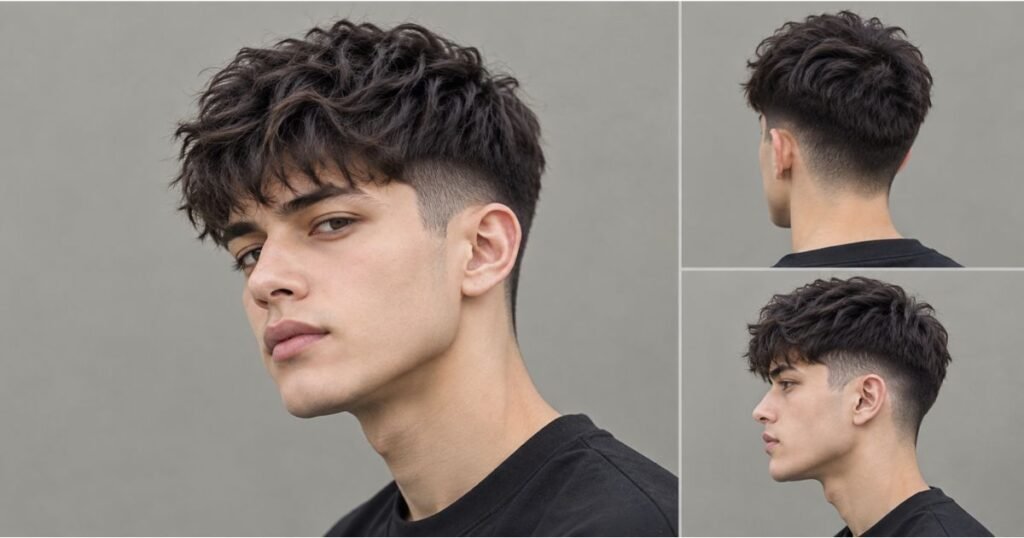
This is the version most people mean when they say “textured crop.” Mid fade on the sides, fringe sitting just above the brow, choppy movement on top. It’s balanced enough for work and casual enough for the weekend, and the mid fade gives you a decent grow-out window before it looks unkempt.
2. Textured Crop with a Skin Fade
The sides get taken down to bare skin, creating hard contrast against the textured top. It looks the sharpest of any variation when it’s fresh, but it also grows out the fastest. If you go this route, plan on a trim every two to three weeks.
3. Textured Taper Fade
Instead of dropping to skin, the sides gradually shorten without ever going bare. It’s the most workplace-friendly option and the one that ages best between cuts, since there’s no hard line to soften as it grows.
4. High Fade Textured Crop
The fade starts up near the temples instead of lower on the head, giving you more visual contrast. One thing worth knowing: a high fade needs a shorter, tighter fringe to stay balanced. Pair it with a long, heavy fringe and the top ends up looking disconnected from the sides, like it doesn’t belong to the same haircut.
5. Drop Fade Textured Crop
The fade curves down behind the ear instead of running in a straight line. It adds shape to the back of the head and works especially well if your head is flatter at the back, since the curve creates the illusion of more depth.
6. Messy Textured Crop
A looser take with more length left on top and less structure overall. The sides stay short, but the top is meant to look like it fell into place rather than being carefully arranged. It still needs product, just applied with a lighter hand.
7. Wavy Textured Crop
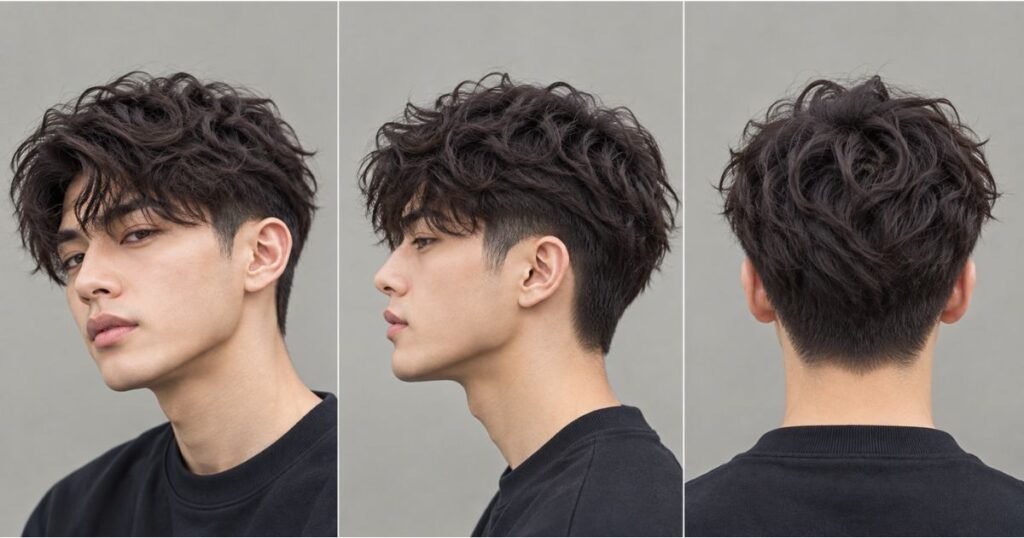
If you have natural wave, this is genuinely one of the easiest versions to maintain, because the wave already gives you built-in texture. A taper or low fade tends to suit wavy hair better than a skin fade, which can look too harsh against a softer texture up top.
8. Undercut Textured Crop
Instead of a gradual fade, the sides are cut short with a hard, disconnected line where they meet the top. It’s a more dramatic look, and the abrupt line actually holds its shape a bit longer between cuts than a blended fade does.
What to Tell Your Barber
Vague instructions get vague results. Walk in with these four details ready:
- Fade type and height. “Mid fade” and “skin fade” are different cuts, and “high” versus “low” changes the whole look. Name both.
- Fringe length. Say whether you want it sitting mid-forehead or just above the brow. If you’re not confident describing it, bring a reference photo.
- Length on top, in inches. Roughly 1.5 to 2 inches for a short crop, 2.5 to 3 inches if you want more of a medium-length version with styling flexibility.
- The technique. Ask specifically for point cutting or razor work on top. Just saying “add some texture” often gets you a standard trim with nothing removed from inside the hair.
How to Style a Textured Crop at Home
The good news is that a well-cut textured crop does most of the work for you. Here’s the basic routine.
Step 1. Start with hair that’s damp, not soaking wet. A towel dry is usually enough.
Step 2. Work a small amount of a matte clay or medium-hold paste through your hands first, then apply it from the back of your head toward the front. Going front to back overloads the fringe before you’ve even touched the crown.
Step 3. Use your fingertips, not a comb, to break the top apart and create separation. A comb smooths everything out and kills the texture you’re trying to build.
Step 4. Let the fringe fall forward naturally. Don’t press it flat against your forehead; that’s what makes a textured crop start looking like a bowl cut.
Styling by Hair Type
Thick hair needs a moisture step before anything else. Work a lightweight, hydrating cream or oil through damp hair and let it dry a bit before adding clay. Skipping this step is the number one reason clay looks clumpy or poofy on thick hair; the clay is fighting bulk it hasn’t been given a chance to settle.
Fine hair benefits from a texturizing powder or dust applied at the roots before your regular product. It adds lift without weighing the hair down, which matters because fine hair goes flat fast under heavier clays.
Wavy or curly hair should be rough-dried with a diffuser or just air-dried, not blown straight. A sea salt spray on damp hair enhances the natural wave instead of fighting it. Less product usually looks better here; you’re working with texture that’s already there.
Common Mistakes That Ruin a Textured Crop
Over-applying product. More clay doesn’t mean more texture. It usually means a stiff, shiny helmet effect. Start with a small amount and build up if you actually need more hold.
Letting the sides grow past the fade line. The fade is what makes the top read as textured instead of just long. Once the sides grow in and blur that contrast, the whole cut loses its shape, even if the top still looks fine.
Combing it instead of finger-styling. A comb creates uniform lines. The entire point of this cut is broken-up, irregular movement, so hands do a better job than any brush.
Skipping the barber conversation. “Textured crop” means slightly different things depending on who’s cutting it. Bring specifics or a photo every single time, even with a barber you’ve used before.
Ignoring your hair’s natural growth pattern. A style that gets forced against the direction your hair naturally grows will fight you every morning. A good barber cuts with your growth pattern, not against it, which is part of why the same haircut looks different on two different heads.
Explore More: Burst Fade Long Hair: A Complete Guide to the Haircut Everyone’s Asking For
Maintenance and Cost Expectations
Trim frequency depends on the fade you choose:
- Skin fades and high fades: every 2 to 3 weeks
- Mid fades and taper fades: every 4 to 5 weeks
- Undercuts: slightly longer than fades, since the disconnected line holds up better through grow-out
One thing barely anyone mentions: the fringe often looks awkward before the sides do. If it starts hanging over your eyes or lying flat before your next appointment, switching to a lighter styling product for a week or two can buy you extra time without a trim.
Pricing varies a lot by location and barbershop tier, but a textured crop typically costs the same as any standard men’s haircut with a fade, since the extra time goes into the point cutting rather than a separate service.
Conlusion
A textured crop earns its popularity because it’s genuinely low effort for how good it looks. The cut does the heavy lifting; your job is just to be specific with your barber, use a light hand with product, and stay on top of trims before the fringe or the fade starts drifting.
Get those three things right, and this is one of the easiest haircuts to wear well, on a Monday morning or a Saturday night out.
Frequently Asked Questions
Is a textured crop the same as a fade?
No. A fade describes what happens on the sides (how the hair gradually shortens toward the skin or a guard length). A textured crop describes the whole haircut, including the choppy, layered top. You can pair a textured crop with a skin fade, a taper, or even an undercut; the fade is just one part of it.
Does a textured crop work for a receding hairline?
Yes, often better than a lot of other short cuts. A slightly longer, forward-styled fringe helps soften the hairline instead of exposing it. If the recession is more noticeable, a French crop’s blunter fringe line tends to cover it even more effectively.
Can I get a textured crop with curly hair?
Definitely, curly hair actually gives you built-in texture that some other hair types have to fake with product. The main adjustment is the sides, where a taper or low fade usually looks more balanced than a skin fade against tighter curl patterns.