Kids Taper Fade Haircuts: The Complete Guide for Parents
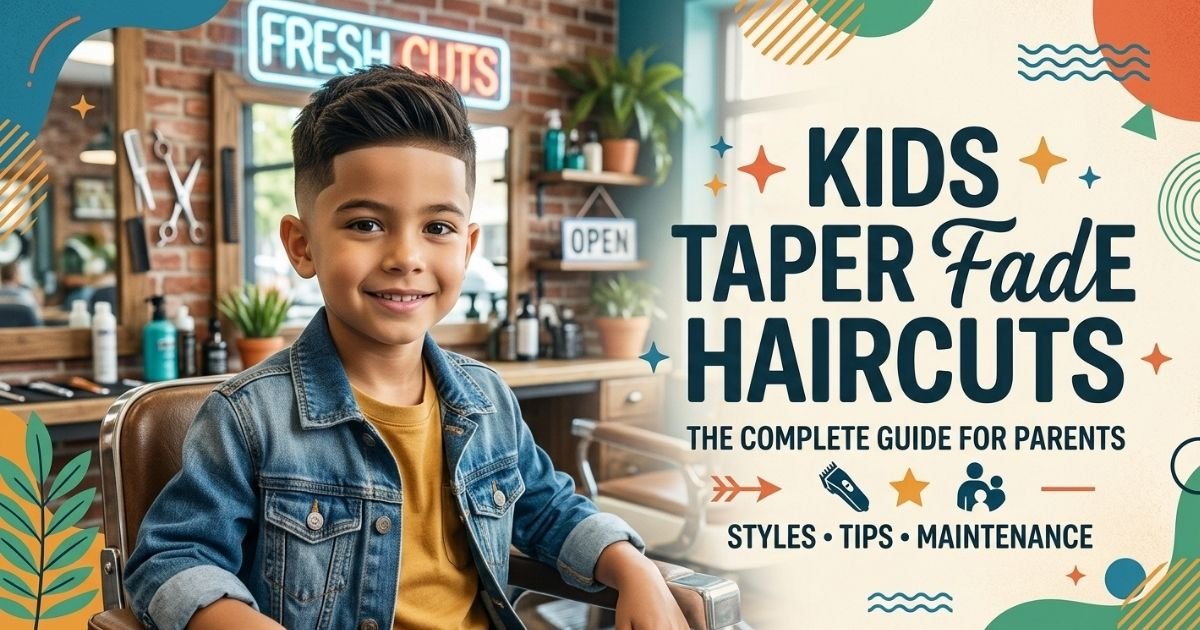
It was easy to have your son’s hair cut. Just a quick cut, perhaps a buzz, and you were set. Boys are now demanding the same sharp fades that they’ve seen in their favorite athletes, older cousins, and YouTubers, as early as four years old. The Kids Taper Fade Haircuts is the most popular hairstyle in barbershop circles nationwide, and it’s no surprise. It looks tidy, it is compatible with almost all types of hair, and it lasts a lot longer than a conventional haircut.
Whether you’re a parent who wants to know what fades are suitable for your child, how often it needs to be touched up, or if your barber will even know what you’re looking for, this guide will help you before your next appointment.
What Exactly Is a Taper Fade
A taper fade is a style in which the hair is cut shorter and shorter as it transitions down to the ears, neckline, and hairline. A taper means a smooth transition, with the length varying gradually from top to bottom, where it may transition into skin or be close-cut, giving a smooth gradient.
The word “fade” just means how slow or fast that transition is. The tighter and more dramatic fade is typically referred to as a skin fade or bald fade, and the softer, more subtle fade is what most barbers refer to as a taper fade. That’s a scale that is more towards the gentler side for kids, because it grows out better and looks neat for longer periods of time between cuts.
Why Taper Fades Have Become So Popular Among Kids
The majority of boys’ haircuts were either a buzz or a scissor cut a few years ago. That’s changed rapidly, and it is not only about the trends.
Fades help to keep hair off the ears and neck, which many children would love, particularly during the hot summer months. They also grow out more evenly than a bowl cut or an uneven trim, which means parents don’t have to run back to the barber every two weeks. And fades are available in all sorts of styles, ranging from a low fade barely visible to a high fade that’s a big statement; there’s a fade for nearly everyone, regardless of their age, hair type, or personality.
And there’s a confidence factor to consider. Boys will see through when their hair is cut for the sake of it, as opposed to being intentional. When kids are feeling a little more put together, a well-done fade is likely to make them feel that way, whether it’s for school or a family event.
Choosing the Right Fade Based on Your Child’s Age
Not every fade suits every age. A style that looks great on a teenager might be impractical for a toddler who can barely sit still for ten minutes. Here’s how most barbers approach it by age group.
Toddlers, Roughly Ages 2 to 5
It’s not about style at this age; it’s about comfort. The majority of toddlers are not patient enough to endure a lengthy, detailed haircut, so barbers suggest a basic, low taper fade and little contrast. The sides remain short but not shaved down to the skin, and the top is a little longer so that it is easy to manage at home.
Many barbers will not take the clippers near a child’s scalp until he or she is closer to age three or four, when the scalp is slightly less sensitive, and the child can sit reasonably still. If your little one is worried about haircuts, request that they be done with scissors over a comb rather than the clippers directly on the skin. Easy on little ones and not as shocking.
School-Age Children (Ages 6-12)
Now it’s where fades truly come into their own. Children at this age are active, playing sports, running around at recess, and generally ruining their hair within an hour of leaving the barbershop. A mid taper fade is a good option here as it will stay in place during all that activity but will still look good for school photographs and family gatherings.
A mid fade with a lightly textured top, a slightly textured top, or a side part will give kids a bit of personality without going over the edge into what a school might deem distracting.
Teens, Roughly Ages 13 to 17
Teenagers typically desire more input in their cut, and that is understandable. A high taper fade with some texture or length on top will allow older boys some experimentation without sacrificing neatness for school. Some teens prefer to add a simple line down the center of their hairline for additional sharpness, but if the design becomes more elaborate than a simple line, it may be advisable to check with your school’s dress code first.
Matching to Your Child’s Hair Type
Most parents don’t realize how important hair texture is when it comes to a fade. It can completely change the look of the same cut when it comes to kids with straight, curly, or thick hair.
Straight hair allows for a clean fade to really stand out. A mid fade with a short, neat top generally looks the most finished and only requires a little bit of gel to hold it in place – a water-based gel.
Curly or coily hair can do no wrong with fades, as the curls add volume and movement to the fade. Either a low or high fade will work here, but a leave-in conditioner or curl cream will make a difference in the way the curls will look day to day with regards to their definition.
Thick or dense hair can make use of a fade that takes away some of the bulk. When you’re getting a transition, have your barber do it slowly so that it doesn’t appear choppy, as thick hair can look choppy if the fade is done too quickly. This is because these children typically require trims slightly more frequently, every 3-4 weeks, to maintain a shape and prevent it from becoming too bulky.
If you have fine or thin hair, then a low taper fade is the best option. If you don’t leave enough room, you can make your hair look thinner than it already is. A light mousse or texturizing spray can help to create fuller-looking hair without weighing it down.
The mixed-texture hair type typically features a blend of straight and curly strands, and works well with a mid fade and a slightly longer top. This will allow the natural texture to be visible through the fade, but still make it look like it’s intentional and not a mess.
Popular Taper Fade Styles for Kids
There isn’t just one version of a taper fade. Here are the styles barbers see requested most often for boys, along with what makes each one different.
Low Fade
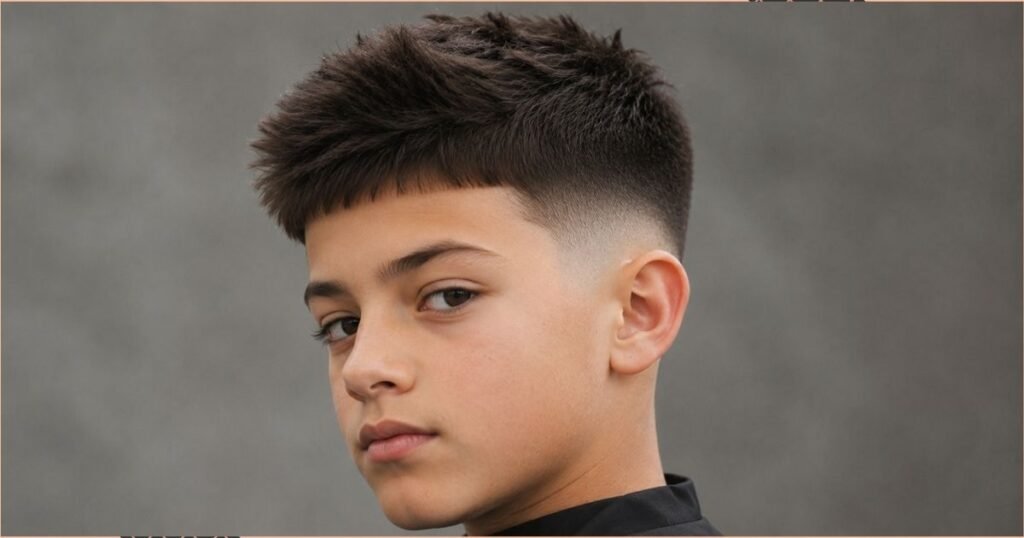
The fade starts just above the ear and blends down smoothly toward the neckline, with more length left on top. It’s subtle, easy to maintain, and works well for almost any occasion, including strict school dress codes.
High Fade
This version starts much higher on the head, creating a bigger contrast between the short sides and the longer top. It’s bolder and tends to be more popular with older kids and teens who want a style that stands out a bit more.
Mid Fade
Sitting between the low and high fade, this starts around the temple area. It’s a good middle ground for parents who want something with a bit more edge than a low fade but without the dramatic contrast of a high fade.
Bald Fade
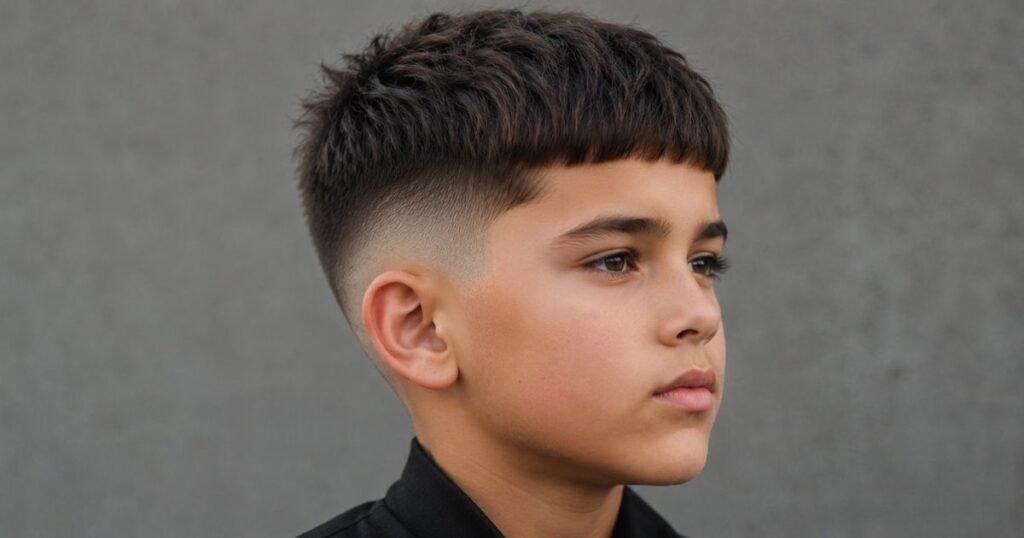
Also called a skin fade, this brings the sides down to the skin while keeping noticeably more length on top. It creates the sharpest contrast of all the fade styles and tends to need more frequent touch-ups to stay looking clean.
Classic Taper
This is the softest version of a fade, with a very gradual transition from the top down to the neckline. It’s less dramatic than a high or low fade and tends to be the easiest style for barbers to keep looking neat as it grows out.
Undercut Fade
The sides and back are cut very short or shaved, while the top is left considerably longer and can be styled in different directions. It’s a bolder look that gives kids more room to style their hair however they like.
Buzz Cut Fade
Short hair all over on top, paired with a faded transition on the sides. This is about as low-maintenance as a fade gets, which makes it a favorite for parents who don’t want to deal with much daily styling.
Comb Over Fade
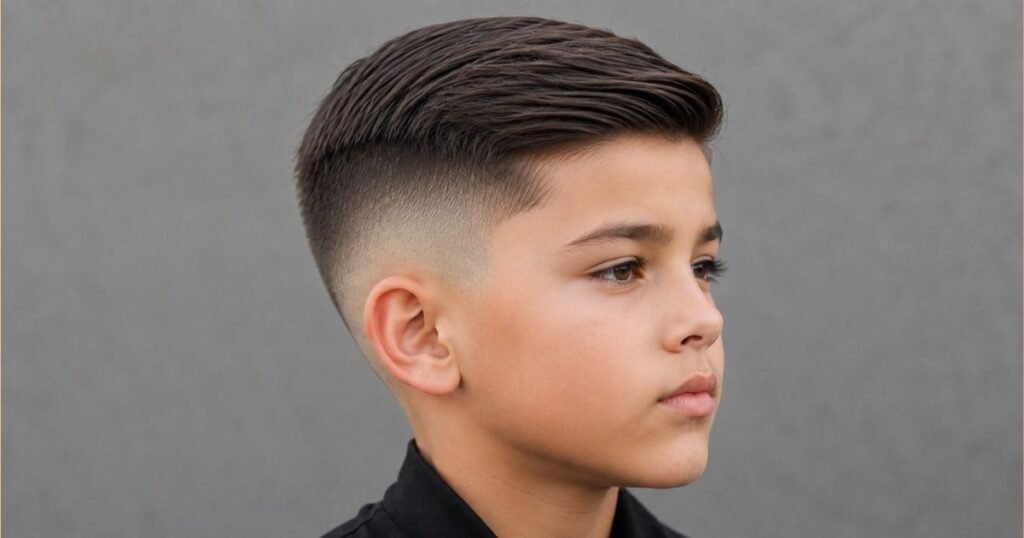
The sides are faded neatly while the top is brushed to one side. It looks polished enough for formal occasions but still works fine for everyday wear.
Pompadour Fade
The top is kept full and voluminous, styled either slicked back or left a little loose, while the sides are faded cleanly underneath. It leans a bit more formal and photographs well.
Mohawk Fade
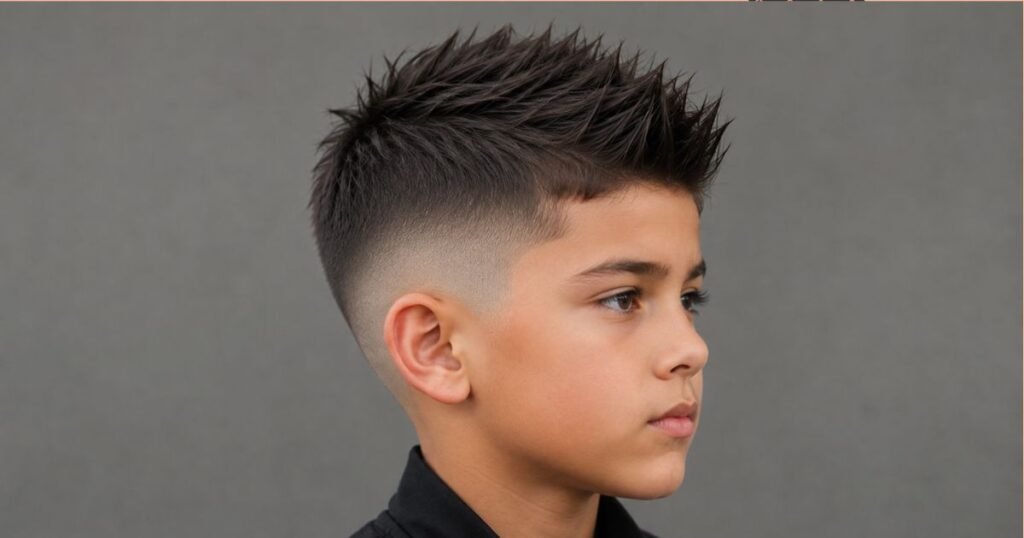
A bolder choice where the sides are faded down while the top is styled into a mohawk shape. Some kids like adding a bit of color for extra flair, though this style is more common for special occasions than everyday school wear.
Tips for fading kids’ hair during the seasons.
A lot of parents don’t consider this until the summer when their child is sweating profusely with all the hair on their head, but weather can actually dictate which fade is best at various times of the year.
A mid or high fade will help to keep kids cooler in warmer months by eliminating more side bulk. The top is typically kept neat with a light styling cream that doesn’t make it heavy in hot weather.
During the colder season, many parents choose a low fade with a little more length on top, as this will provide a little more warmth under hats and beanies. Moisturizing the scalp is also more crucial because cold air dries the scalp quicker.
Explore More: High Fade Mullet Haircut: The Complete Guide
How Often Kids Need a Fade Touched Up
This is hugely dependent on age and hair growth rate, but here’s a general timeline most barbers follow.
A touch-up is typically required every 5-6 weeks for toddlers as hair grows slower and styles tend to be simpler. The fade should be refreshed every 3-4 weeks for school-age children to maintain the effect throughout the day. Those teens who like to have fades that are more intense or lines that are more defined tend to come in every 2-3 weeks, as the more intense the fade, the sooner it will look grown out.
It’s a good idea to schedule the appointment a few days in advance instead of the morning of an important event, such as school picture day or a family gathering. Fades typically appear at their best 2-3 days after the cut when everything has settled.
Maintenance Tips Every Parent Should Know
Keeping a kid’s fade looking fresh between barbershop visits doesn’t require much, but a few habits go a long way.
Stick to child-friendly styling products. Water-based pomades and light gels work well without being harsh on a child’s scalp. Avoid stronger waxes or anything with heavy chemicals meant for adult hair.
Brush or comb hair every day with a soft-bristle brush, particularly for younger children who may be less inclined to put up with a lot of product. If you have curly hair, put a little leave-in conditioner in your hair each morning to keep the curls from getting frizzy all day long.
Let your barber know that you want things kept age-appropriate. A fade doesn’t have to be dramatic, and simpler styles tend to fade out more gracefully, with fewer “back and forth” passes.
If you’re thinking of anything other than a normal fade, it’s also a good idea to check your child’s school handbook. Some schools will allow any fade; others may not allow shaved fades, extreme contrast, or anything that may be considered a distraction. It will save you an awkward conversation later if you check in advance.
Have a conversation with Your Barber.
If you don’t know exactly what you are looking for, most barbers would prefer a clear and concise request to a vague one. A little like saying “low taper fade, but with a little bit of hair left on top and fade in a gradual way into the skin” will give your barber a starting point. Taking a reference picture is also useful if your child has a particular style in mind from a friend, sibling, or something online.
It’s also okay to seek your barber’s candid advice on what will work best for your child’s hair type and face shape. A competent barber will let you know if a style you’re imagining won’t work with your kid’s hair type, and offer a style that’s more similar.
Conclusion
A good taper fade is one of the easiest cuts for your kid to get that looks sharp, is age-appropriate, and requires minimal maintenance at home. The right choice really is dependent on three things: your child’s age, their natural hair behavior, and how much maintenance you can reasonably expect to do between appointments. With those sorted, there’s not much guesswork left, and you’re left with a style your child will be glad to keep returning to.
Frequently Asked Questions
At what Age can Children Begin to have a Taper Fade?
Most barbers will be able to begin cutting fades at about four to five years old when a child can sit still long enough to be safely clipped. For toddlers as young as 2-3, some barbers will perform a gentler scissor cut, but a real skin fade will wait until the child is a little older.
Do Taper Fades Work with all Hair Types?
Yes. Fades can be customized for straight, curly, wavy or thick hair. It’s not whether or not the style will work, but rather how the barber transitions and what products will be recommended afterward.
Can Tapers be Worn at School?
Low or mid fades are acceptable in most schools, as they look neat, but not extreme. If your child is looking for a more extreme look, such as a higher fade, shave, or something with color, it is best to review your child’s school policy to ensure that it is acceptable.