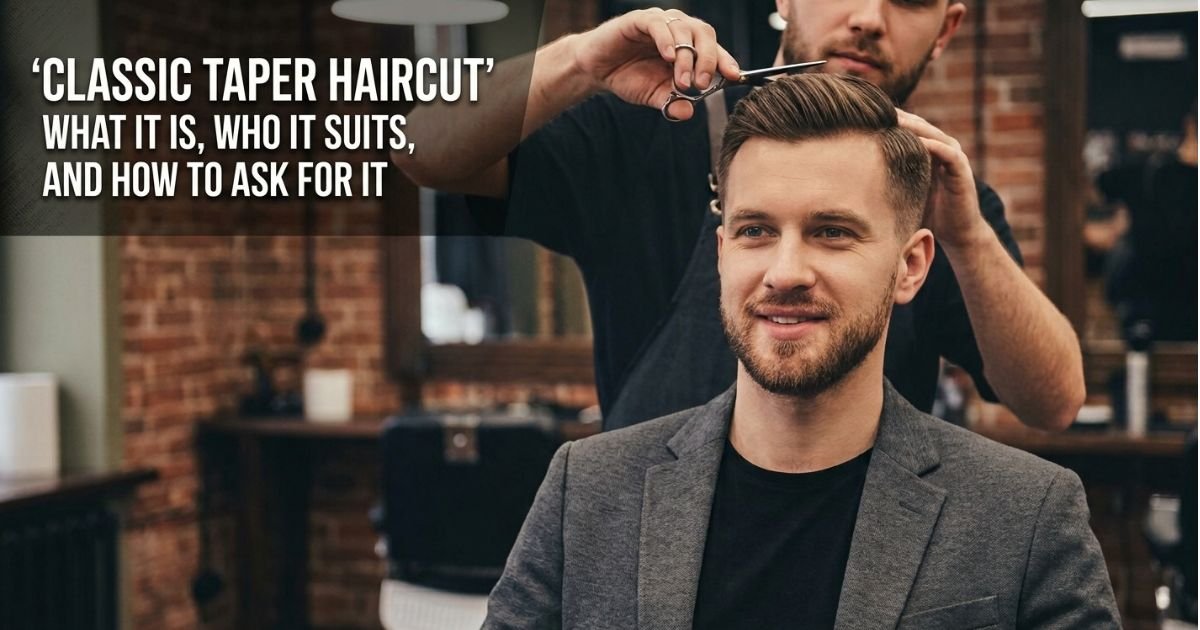
Classic Taper Haircut: What It Is, Who It Suits and How to Ask for It
The classic taper haircut has been walking into barbershops for generations, and it still shows up on guys in offices, classrooms, and wedding photos today. The idea is simple. Your hair stays longest on top, then steps down gradually along the sides and back until it’s neat and short at the neckline and around the ears.
What makes it popular is that it looks put together without trying hard. It grows out slowly, it’s easy to style, and it doesn’t go out of fashion.
This guide covers how it works, how it differs from a fade, the main variations, what suits your face and hair, and what to tell your barber so you walk out with the cut you pictured.
What Is a Classic Taper Haircut?
A classic taper is a short back and sides cut with a longer top. The sides are cut with clippers or scissors so the length shortens a little at a time as it moves down toward the ears and nape.
The word “taper” just means getting narrower gradually. That’s exactly what happens to your hair here.
Three things define it:
- A top you can actually style. Usually 2 to 4 inches, long enough to comb, part or push around.
- Sides that shorten in steps. The change in length is smooth, not sudden.
- A neat, natural finish at the edges. The neckline and sideburns end short, but the cut doesn’t aim for a bald, skin-level look.
Barbers sometimes call it a “regular taper” or a “businessman’s cut.” Those are the same haircut under different names.
Classic Taper vs Taper Fade vs Skin Fade
This is where most people get confused, and it’s the question barbers hear most often.
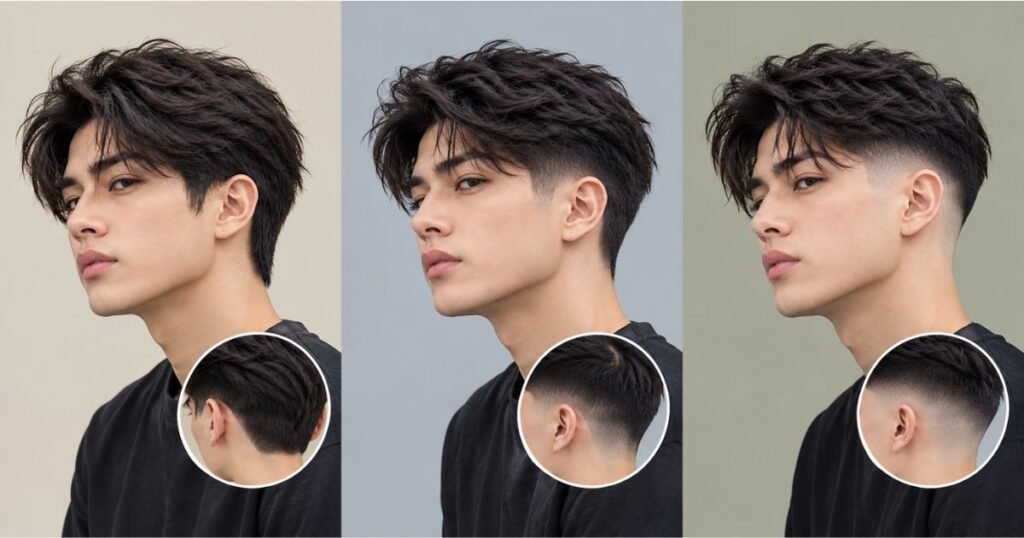
A classic taper leaves some hair at the neckline. A fade keeps going shorter until the hair disappears into the skin. A taper fade sits between the two. It keeps the overall taper shape but fades out the last bit at the edges.
| Feature | Classic Taper | Taper Fade | Skin Fade |
|---|---|---|---|
| Where the sides end | Short hair at the neckline | Very short or skin at the edges | Skin |
| Contrast with the top | Soft | Medium | Strong |
| Look | Traditional, polished | Clean and modern | Sharp, high contrast |
| How it grows out | Slowly and evenly | Noticeable after 2 to 3 weeks | Loses its shape fastest |
| Typical barber visit | Every 4 to 5 weeks | Every 3 to 4 weeks | Every 2 to 3 weeks |
| Best for | Office, formal, everyday | Casual to business casual | Fashion forward, short top styles |
If you want the sharper edge of a fade without giving up the classic shape, a taper fade is the compromise. HairDep also has a guide to the low taper fade for kids and boys if you’re booking for a younger family member.
Why the Classic Taper Has Lasted So Long
The cut comes from military and barbershop grooming, where short sides and a manageable top made sense for daily life. Over time, office culture adopted it as the default professional look.
The reason it never disappeared is practical. Fades come and go, but a taper doesn’t need an appointment every two weeks to look decent. It suits a 17-year-old at a school dance and a 60-year-old giving a presentation, and it doesn’t need a trendy product to look right.
Low, Mid and High Classic Taper: Which Height Should You Pick?
The taper height is where the shortening begins. It changes the whole feel of the cut, so this is the first decision to make.
| Taper Height | Where It Starts | Look | Best For |
|---|---|---|---|
| Low taper | Around the ear and nape | Soft, conservative | Formal work, older men, receding temples |
| Mid taper | Around the temple | Balanced, everyday | Most guys, most hair types |
| High taper | Higher on the side of the head | Bold, more contrast | Younger crowds, curly or thick tops |
Low Classic Taper
The low taper is the safest version. It only shortens the hair near the ears and neckline, so the sides keep most of their length.
If your workplace is conservative or you just want a clean look that doesn’t draw attention, start here. It pairs well with a side part or a comb-over.
Mid Classic Taper
The mid taper begins the step-down near the temple. It gives a bit more shape without looking dramatic.
High Classic Taper
The high taper starts the shortening higher up, so the contrast between the sides and the top is bigger. It makes thick or curly hair look tidier, because the bulk gets removed where it tends to puff out.
Classic Taper Haircut Styles Worth Asking For
You don’t need 60 variations. You need to know which ones are actually different from each other. These are the ones that matter.
Taper with a Side Part
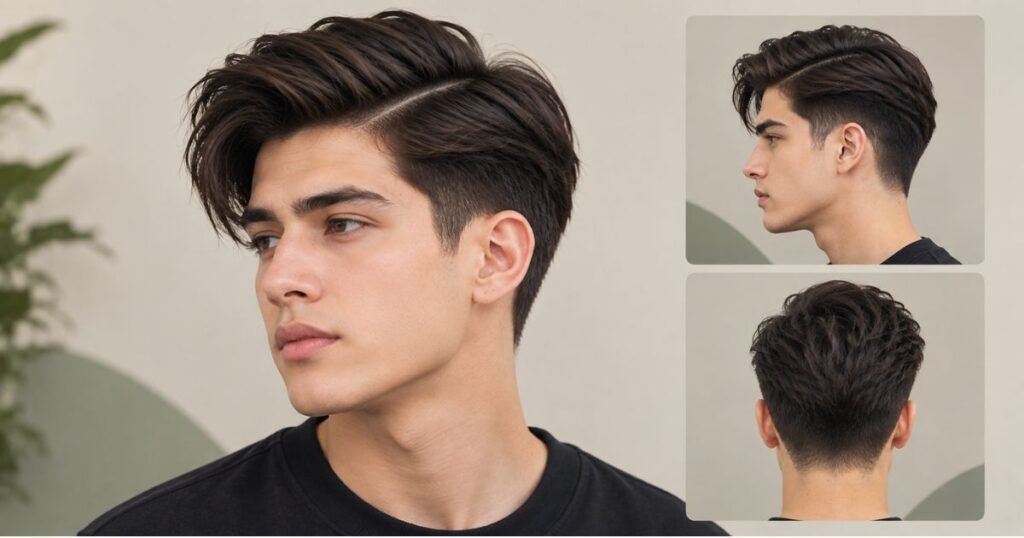
This is the version most people picture. The top is 2 to 3 inches, parted on the side and combed neatly. A water-based pomade gives it a polished finish, while a matte clay keeps it more natural.
Taper with a Comb-Over
Good for fine hair or thinning areas. The longer top gets swept across, so it looks fuller. Keep the sides slightly longer than you think you need, because very short sides can make thinning more obvious.
Taper with a Slick Back
This needs 3 to 4 inches on top. The result looks sleek and works best with a mid or low taper. If your hair has a strong cowlick at the front, ask your barber how it sits before committing.
Taper with a Short Crop or Crew Cut
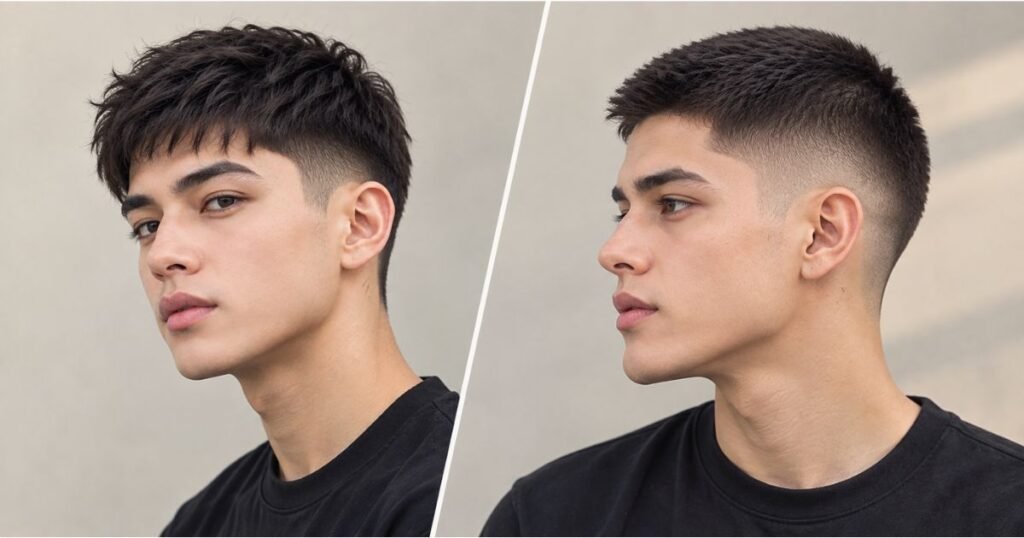
Here, the top is around 1 to 2 inches. It needs almost no styling and works in hot weather or for active routines. For a textured version, check out HairDep’s textured crop haircut guide.
Taper with Natural Texture
Skip the combing and let the hair do its thing. A little paste or sea salt spray adds movement. This suits wavy hair especially well.
Taper with a Pompadour or Quiff
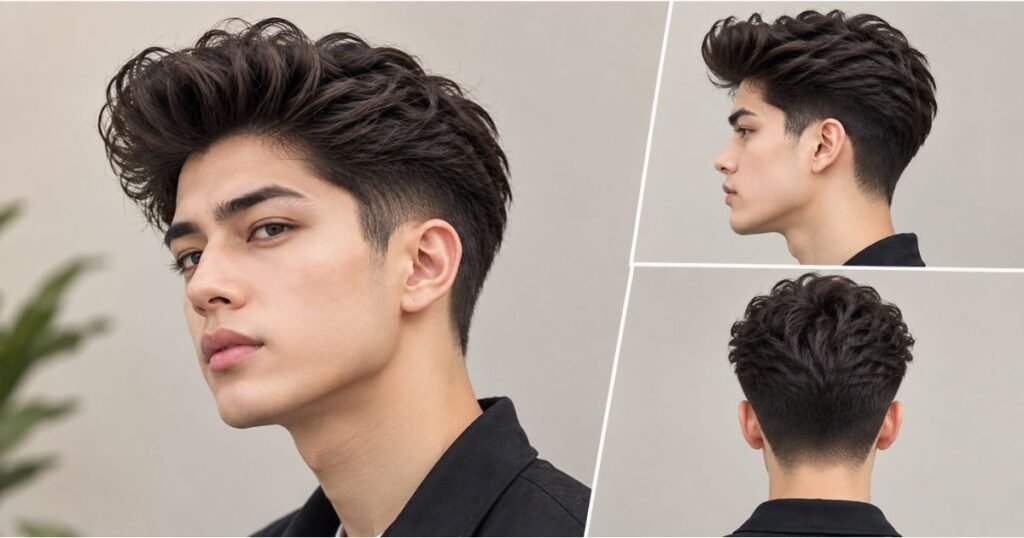
Longer on top, usually 3 to 4 inches, with the front pushed up and back. It takes a blow dryer and some patience. The taper keeps the sides tight so the volume on top looks deliberate.
Taper with a Beard
When you have a beard, the sideburns should blend into it so there’s no gap or sudden line. Tell your barber you want the taper and beard to connect, and book both at the same visit so they age together.
Scissor Taper vs Clipper Taper
Here’s something most guides skip. A classic taper can be cut two ways, and they feel different.
A clipper taper uses guard numbers to step the length down. It’s fast, even, and very precise.
A scissor taper, often done with scissors over comb, gives a softer look with a natural, slightly lived-in texture. It takes longer, and not every barber offers it.
If you like the traditional barbershop feel and your hair is straight to wavy, ask if your barber does scissor work on the sides. If you want a tight, uniform look, clippers are the better call.
Best Classic Taper for Your Face Shape
Face shape isn’t a strict rule, but it helps you balance proportions.
| Face Shape | Taper Choice | Top Style | What to Avoid |
|---|---|---|---|
| Oval | Any height | Almost anything | Nothing in particular |
| Round | Mid to high | Some height on top, like a quiff | Flat tops with very low sides |
| Square | Low to mid | Softer, textured top | Very sharp, boxy shapes |
| Oblong | Low to mid | Shorter, fuller top | Tall pompadours |
| Heart | Low | Fuller sides, not too much volume up top | Very high tapers |
| Diamond | Low to mid | Side part or a little fringe | High taper with slicked-back top |
The logic is simple. If your face is long, keep the top lower and fuller. If it’s round, add a little height. If your jaw is strong, soften things up with texture.
Classic Taper for Every Hair Type
The cut itself is the same, but the details change with texture.
Straight Hair
Straight hair shows every line, so the taper looks very clean. Side parts and slick backs work best. A pomade or matte paste is usually enough.
Wavy Hair
Wavy hair does well with a bit of length, around 3 inches. A light cream or sea salt spray helps the waves hold shape without feeling heavy.
Curly and Coily Hair
The taper stops curly hair from spreading out at the sides. Keep enough length on top for the curls to show. A curl cream on damp hair works better than gel, which can make curls stiff.
Thick Hair
Thick hair can look boxy around the ears. Ask your barber to blend the sides carefully and thin the top slightly so it sits flat.
Fine or Thin Hair
Fine hair looks fuller when the sides are kept tight, and the top has a little length. A light mousse or texture powder gives lift without weight.
The Business Taper
If you’re after the most office-friendly version, this is it.
- Top: about 2 to 2.5 inches
- Taper: low and not too dramatic
- Neckline: natural and tapered
- Style: side part or combed back, with a matte or low-shine finish
- Visits: every 4 to 5 weeks
One thing real people learn the hard way: don’t get the cut the day before an interview or event. Give it two or three days so the edges settle, and the haircut looks lived in instead of fresh off the chair.
How to Ask Your Barber for a Classic Taper
Most bad haircuts come from vague instructions. “Short on the sides” can mean ten different things.
Say it in this order:
- Name the cut: “I’d like a classic taper.”
- Give the top length: “About 2 and a half inches on top.”
- Pick the height: “Low taper” or “mid taper.”
- Describe the sides: “Blend the sides gradually; nothing that goes to skin.”
- State the neckline: “A natural, tapered neckline, not squared off.”
- Show a photo. It beats any description.
Clipper Guard Reference
Each guard number adds one eighth of an inch. These numbers vary by barber, so treat them as a conversation starter, not a script.
| Guard | Length | Typical Use |
|---|---|---|
| #1 | 1/8 inch | Lower sides, near the neckline |
| #2 | 1/4 inch | Mid sides |
| #3 | 3/8 inch | Upper sides, start of the taper |
| #4 | 1/2 inch | Longer sides or a short top |
If you want a slightly softer look, ask your barber to use a longer guard at the top of the taper and blend down.
Common Mistakes to Avoid
A few things come up again and again.
Asking for a taper but meaning a fade. If you want skin showing at the edges, say so. If you don’t, say that too.
Going too short at the neckline. It might look sharp for a week, then grow into a messy edge. A natural neckline grows out far better than a squared one.
Skipping the sides at home. Don’t try to reshape the taper yourself. Trim the neckline lightly if needed and leave everything above the ears to your barber.
Using too much product. A pea- or thumbnail-sized amount is enough. More makes the hair greasy and flat.
Washing every day. Two or three times a week is plenty for most hair types. Over-washing dries out your scalp and makes the hair harder to style.
Explore More: Burst Fade Wavy Hair: Best Styles, Barber Tips and Daily Care
How to Style a Classic Taper at Home
You only need a few minutes.
- Start with towel-dried, slightly damp hair.
- Rub a small amount of product between your palms.
- Work it through from the roots to the tips, avoiding clumps on the scalp.
- Comb or shape the hair into your preferred style.
- For extra volume, blow dry on medium heat while lifting at the roots.
- Finish with a light mist of texture spray for casual looks.
Which Product Suits Which Finish
| Finish | Product | Hold |
|---|---|---|
| Neat and glossy | Water-based pomade | High |
| Natural and matte | Clay or paste | Medium to high |
| Casual texture | Sea salt spray | Light |
| Volume for fine hair | Mousse or texture powder | Light |
| All-day hold for thick hair | Wax | High |
How Often Should You Get a Classic Taper?
Most people stay presentable for about 4 to 5 weeks. Some stretch to 6 if the cut is low and the top is short.
If you like the edges to stay crisp, 3 to 4 weeks is a better target. Hair grows roughly half an inch a month, so you’ll notice the neckline and ears first.
Sleep on a smooth pillowcase if your hair frizzes, and use a fine-tooth comb between washes to keep the shape neat.
Conclusion
The classic taper isn’t flashy, and that’s the point. It’s a cut you can wear to a meeting on Monday and a family dinner on Saturday without changing a thing.
Pick a height that fits your lifestyle, give your barber clear numbers and a photo, and keep the product light. Do that, and you’ll get a haircut that looks good on day one and still looks decent a month later.
Frequently Asked Questions
Is a classic taper the same as a regular taper?
Yes. “Regular taper” is the casual barbershop term for the same traditional cut. Both mean a longer top with sides that shorten gradually.
What is the difference between a classic taper and a fade?
A classic taper keeps short hair at the neckline and sideburns. A fade continues down to the skin. The taper is softer and more traditional, while the fade has more contrast and needs more frequent visits.
Does a classic taper work on curly hair?
Yes. It removes bulk from the sides, so curls on top look defined instead of wide. Keep the top long enough for curls to form and use a curl cream on damp hair.