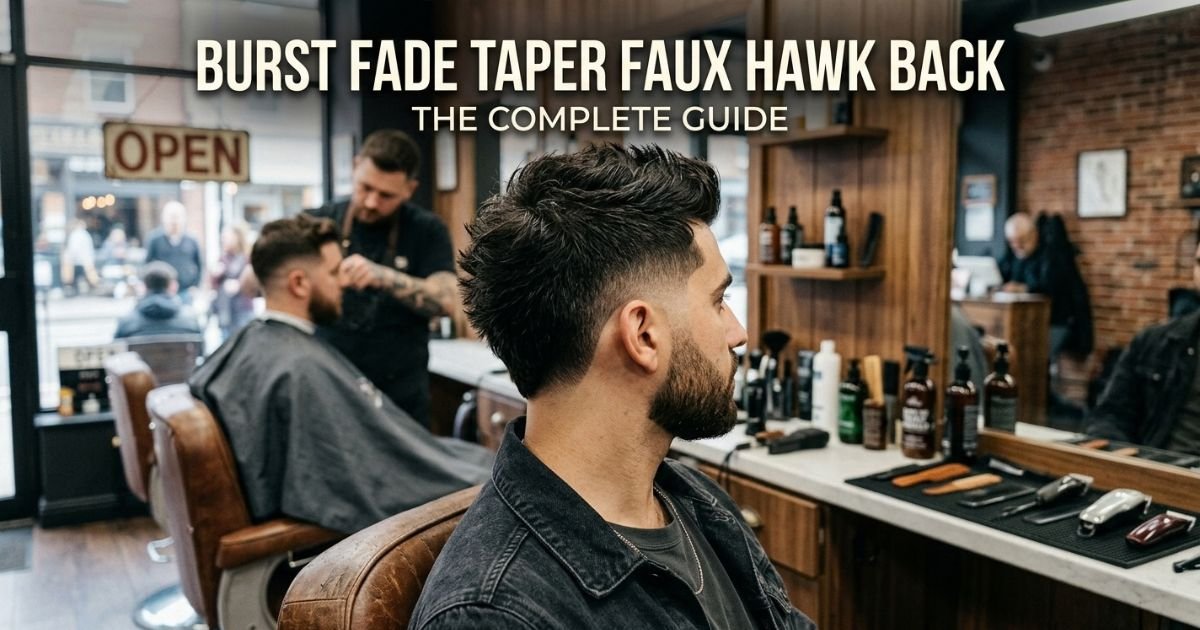
Burst Fade Taper Faux Hawk Back: The Complete Guide
Most guys judge a haircut from the front. Then a friend snaps a photo from behind, and the whole thing falls apart. That’s exactly why the burst fade taper faux hawk back deserves its own guide.
The front and top get all the attention, but the back is what tells people whether your barber actually knew what they were doing. This guide covers what the cut is, how the back should look, what to say in the chair, and how to keep it sharp at home.
What Is a Burst Fade Taper Faux Hawk Back?
It’s three ideas combined into one haircut.
The faux hawk is a raised strip of longer hair running from the front hairline toward the crown. Unlike a true mohawk, the sides are not fully shaved, so the whole thing looks softer and easier to wear to work.
The burst fade is a curved fade that wraps around the ear in a half circle. The hair is shortest right at the ear and gets longer as it moves away from it.
The taper back is how the haircut finishes at the nape. Instead of stopping at a hard line, the hair gets gradually shorter down the neck until it melts into the skin.
Put together, you get a tall, textured center, clean sides that curve around the ears, and a neckline that looks finished from every angle.
Burst Fade vs Taper Fade vs Drop Fade
These three get mixed up constantly, and the confusion is a big reason people leave the shop with the wrong cut.
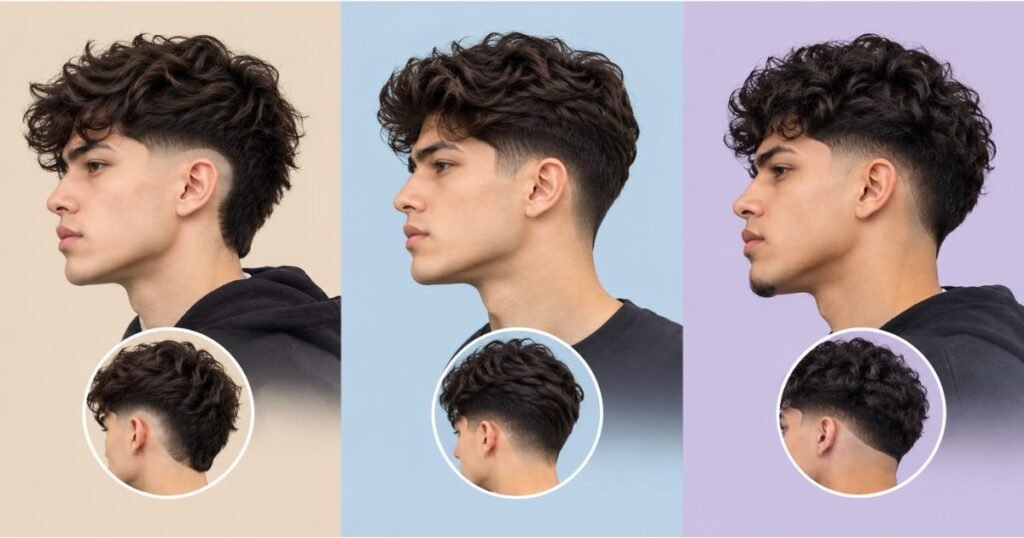
A taper fade goes straight around the head in a fairly even line, usually leaving a bit more length. A drop fade dips down behind the ear, following the curve of the skull. A burst fade does something different. It curves around the ear like a sunburst and leaves the hair behind it much longer.
That longer section at the back is what makes the burst fade so good for a faux hawk. The hair on top and the hair at the back flow into each other instead of being cut off from one another.
Here’s the catch. Some barbers say “taper” to mean a soft, short-guard finish and others use it as a synonym for a fade. Both are valid, which is why you’ll want to describe the result and not only name the cut. More on that shortly.
Faux Hawk vs Mohawk: What’s the Real Difference?
A mohawk has a strip of hair with the sides shaved or clipped very short, and the line between them is abrupt. A faux hawk keeps the sides short but not shaved, and the transition into the center is gradual.
In practice, a mohawk reads as a statement. A faux hawk reads as a stylish haircut that you can dial up or down depending on the day. If you have an office job, a family wedding, and a Friday night out in the same week, the faux hawk is the one that survives all three.
Why the Back Matters More Than You Think
Here is something most guides skip. The back of your head is what people see when they walk behind you, and it’s also the area that grows out first and looks messy fastest.
A strong back has three things going for it. The center strip flows into the crown without a gap. The fade around the ears looks symmetrical from behind. And the neckline is clean without looking like it was cut with a ruler.
Tapered Neckline vs Blocked Neckline
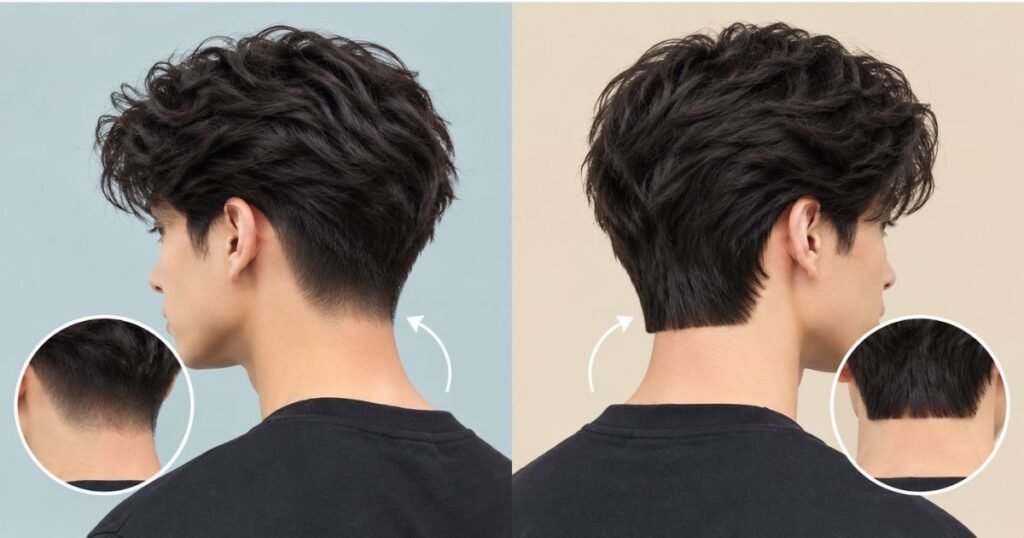
A blocked neckline ends in a hard, straight line across the nape. It looks sharp on day one and shaggy by day ten, because there’s nothing to hide the regrowth.
A tapered neckline fades into the skin. It’s more forgiving, ages better, and matches the soft curve of a burst fade. For this haircut, taper is almost always the right choice.
Popular Variations of the Cut
You don’t have to copy one exact photo. The main choices are how high the burst starts, how close the shortest part goes, and how you finish the top.
Low, Mid, and High Burst
A low burst starts just above the ear and feels subtle and office-friendly. A mid burst sits around the temple line and is the safe, balanced option. A high burst starts near the temples, removes more hair from the sides, and gives the strongest contrast with the top.
Rounded vs V-Shaped Back
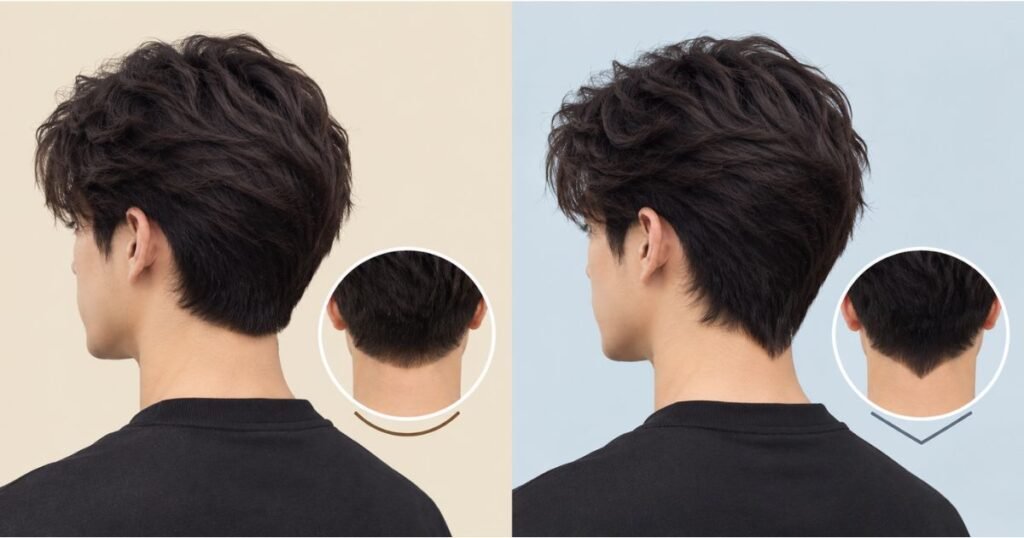
The rounded shape follows the natural curve of your neck and looks relaxed. The V shape points down toward the spine and gives a more angular, dramatic finish.
If you have a short neck, a rounded taper usually flatters you more. If you have a longer neck and want the cut to look sharper from behind, the V is worth asking about. Either way, tell your barber which one you want, because they won’t always guess.
Skin Fade vs Shadow Fade vs Soft Taper
A skin finish takes the shortest part down to bare skin and gives the sharpest look, but it shows regrowth quickly. A shadow finish stops just short of skin, which looks softer and is easier to live with. A soft taper keeps more length overall and suits people who don’t want a lot of visible scalp.
If this is your first burst fade, a shadow finish at mid height is a low-risk starting point.
Textured vs Sharp Top
A textured top uses point cutting to create uneven, choppy pieces. It looks natural and takes about two minutes to style. A sharp top is cut cleaner and styled with a firmer product, which suits a more polished, groomed look.
Curly and Coily Hair
Curls are a natural fit here because they stack height on their own, so you don’t fight gravity the way straight hair does. Ask your barber to scissor-cut the top so your curl pattern stays intact, and keep the length in the center so the curls have room to stack. If you have tighter coils, the ear arc becomes the star of the cut, and it’s worth being very specific about how wide it should be.
With a Beard
A beard pairs well with this cut as long as the fade and beard blend into each other near the sideburn. If the beard starts abruptly where the fade ends, the two look like separate haircuts. Ask your barber to connect them.
Who Should Get This Haircut?
Most people can pull it off, but a few things help you get the best result.
Face shape: Oval and square faces suit almost any version. On rounder faces, the height on top adds length. On longer faces, keep the top a bit lower and lean on the width of the burst.
Hair type: Medium to thick hair works best because it holds the shape. Fine hair can still work, but you’ll want texture powder or a light clay for grip. Wavy and curly hair gets extra volume for free.
Hairline: If your hairline is receding at the temples, a high burst can make that more obvious. A lower burst is usually kinder.
Explore More: 3B Hair Men: The Complete Guide to Cuts, Care, and Styling That Actually Works
How to Ask Your Barber for It
“Give me a burst fade faux hawk” leaves too much room for interpretation. Here’s a script you can adjust and use as is.
“I’d like a mid burst fade curving around the ear, taken down to a shadow finish. Leave about two to three inches through the center and keep it textured, not blunt. I want a tapered neckline in a rounded shape at the back, and please keep the ear curves symmetrical.”
That one paragraph covers the four things that matter most: burst height, shortest finish, top length, and the shape of the back.
Two more tips that make a real difference. Bring a photo of the side and one of the back, because most inspiration pictures only show the front. And ask the barber to show you the back with a hand mirror before you leave the chair, since fixing something takes ten seconds now and a week of grow-out later.
How to Style It at Home
You don’t need a long routine, but the order matters.
1. Start with damp hair. Towel-dry until it’s no longer dripping. Product on soaking wet hair just weighs it down.
2. Blow-dry for lift. Use your fingers or a vent brush to push the hair up and toward the center while you dry. Finish with a shot of cool air so the shape sets.
3. Pick the right product. Matte clay gives natural hold and no shine. Wax is flexible and easy to rework. Pomade gives a polished finish. Texture powder adds grip for fine hair. For curls, use a curl cream to keep the pattern defined.
4. Use less than you think. A coin-sized amount is usually plenty. Warm it in your palms, then work it from the front toward the crown.
5. Shape the center. Pinch small sections and pull them slightly upward and inward. Shake it out a little so it doesn’t look like a helmet.
One more thing worth knowing. Washing every day strips oils and makes styling harder. Most guys do well washing three or four times a week and rinsing with water in between.
How to Keep It Looking Fresh
A burst fade grows out faster than most people expect, because the sides are so short that even a few days of growth changes the look.
Week 1: The cut looks its best.
Week 2: The neckline and ear curve start to soften. This is the sweet spot for a quick clean-up if you like a crisp look.
Week 3: The fade begins to blur into the top, and the shape loses definition.
Week 4 and beyond: It becomes a grown-out taper. Still wearable, but the “burst” is gone.
For a skin finish, plan on a visit every two to three weeks. A shadow finish or soft taper can stretch closer to four. The top usually needs shaping only every four to six weeks, so ask your barber about a shorter “sides and neck only” visit in between. Many shops charge less for it.
If you have a steady hand, you can tidy the nape at home with a trimmer. Go slowly, follow the existing line, and never try to redo the fade itself.
Common Mistakes to Avoid
Skipping the back photo. A front-only reference is how people end up with a blocked neckline they didn’t want.
Going too high on the burst without checking the hairline. A high burst on a receding temple can make it look worse.
Leaving too little length on top. If the center is shorter than an inch or so, you can’t build a faux hawk. It will just look like a short crop.
Overloading on product. Stiff, shiny hair looks dated. Aim for movement.
Waiting too long between cuts. The style depends on contrast. Once the sides grow, the contrast disappears.
Sleeping on it with wet product still in. Rinse or at least refresh in the morning. On curly and coily hair, a satin pillowcase or durag helps preserve the shape.
Conlusion
The best version of this haircut is one that looks good from the back mirror and not only from the front. If you remember one thing, make it this: describe the ear curve, the shortest finish, the top length, and the neckline shape, and bring a photo of the back.
Do that, and you’re far more likely to walk out with the cut you had in mind and a fade that still looks decent two weeks later.
Frequently Asked Questions
How often should I get a burst fade taper faux hawk touched up?
Every two to three weeks if you want it razor sharp with a skin finish. Every three to four weeks works if you go with a shadow fade or a softer taper. A quick neckline clean-up in between can buy you another week.
Does a burst fade faux hawk work on curly or coily hair?
Yes, and it’s one of the best matches. The curls give you height and texture without much effort. Just keep enough length in the center and ask the barber to scissor-cut the top so your curl pattern isn’t disturbed.
Can I get this cut with short hair on top?
You need at least two inches or so in the center to build a proper ridge. If your hair is shorter, ask your barber to keep the top as is and only shape the sides and back for now. In a couple of months, you’ll have enough length to style it.