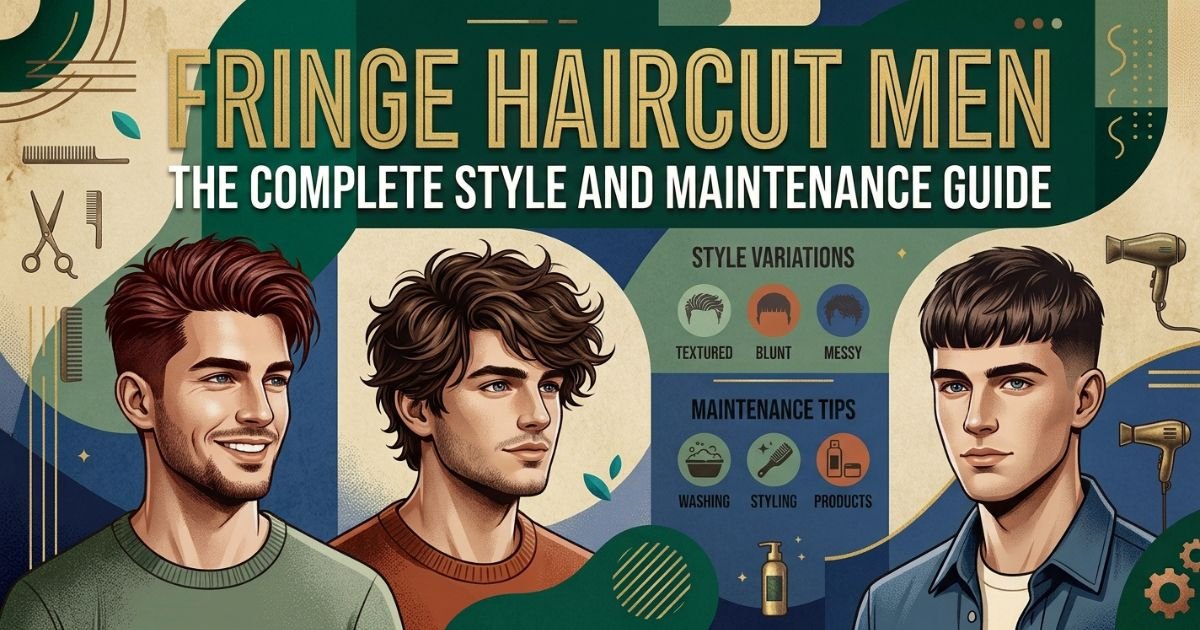
Fringe Haircut Men: The Complete Style and Maintenance Guide
One of the easiest haircuts a man can have to alter the entire look without sacrificing length or going for a drastic cut is a fringe haircut. It highlights the front of the face, adds texture on top, and looks great with almost any side style (tight fade to longer taper). So you’ve been considering letting your hair grow out a little longer and trying this out? This Fringe Haircut Men guide will cover all of this for you before you next see your barber.
What Is a Fringe Haircut Men
A fringe is a haircut that has a longer front area of hair combed or brushed forward over the forehead. Some people refer to it as bangs, although this is more commonly used for women’s hairstyles. A fringe typically hangs between the eyebrows and the hairline on men and can be straight or swept to the side or left loose and ruffled.
The difference between a fringe and a regular haircut is where the focus is directed. Most men’s cuts grow in height or shape at the crown or top. A fringe turns to the front, affecting the overall look of the face. When the front hair is longer, barbers tend to cut it shorter on the sides, whether that’s a fade, taper, or just a trim, to create a stark contrast between the top and sides.
Men opt for this style for some practical reasons. Can help to soften sharp or angular features. Provides partial protection to a higher forehead. It can be used on straight, wavy, and curly hair. Once cut the right way, it doesn’t require a ton of daily maintenance to be put together.
Popular Fringe Haircut Styles for Men
There is no single way to wear a fringe. The length, texture, and finish all change the overall vibe, so it helps to know the main variations before you sit in the barber chair.
Classic Fringe
The traditional fringe is a straight, square-cut that rests just above the eyebrows. It’s clean and structured, making it a great choice for men who like something neat. This is the type that works best with straight or lightly wavy hair because the blunt edge doesn’t need a lot of styling to maintain its shape. It typically only requires a little pomade or clay.
Textured Fringe
This is the version most barbers get asked for right now. Instead of one even line, the ends are cut with texturizing shears so the fringe falls unevenly and picks up natural movement. It reads as more relaxed and less done up than the classic version, and it looks good with a fade or taper on the sides.
Fringe with Short Sides
A long, shaggy fringe with a tight fade or undercut is likely one of the most popular styles in men’s hairstyles today. The long top and the short sides with a close shave add a sharp, modern look to the cut, and maintenance is minimal, primarily on the top.
Side Swept Fringe
This type does not fall straight down, but is combed diagonally across the forehead. It’s a bit more refined than a straight fringe and can be used in an office environment as it’s seen as neat and orderly, not edgy. Styling typically involves blow-drying the hair in the direction desired and setting with a light pomade.
Messy Fringe
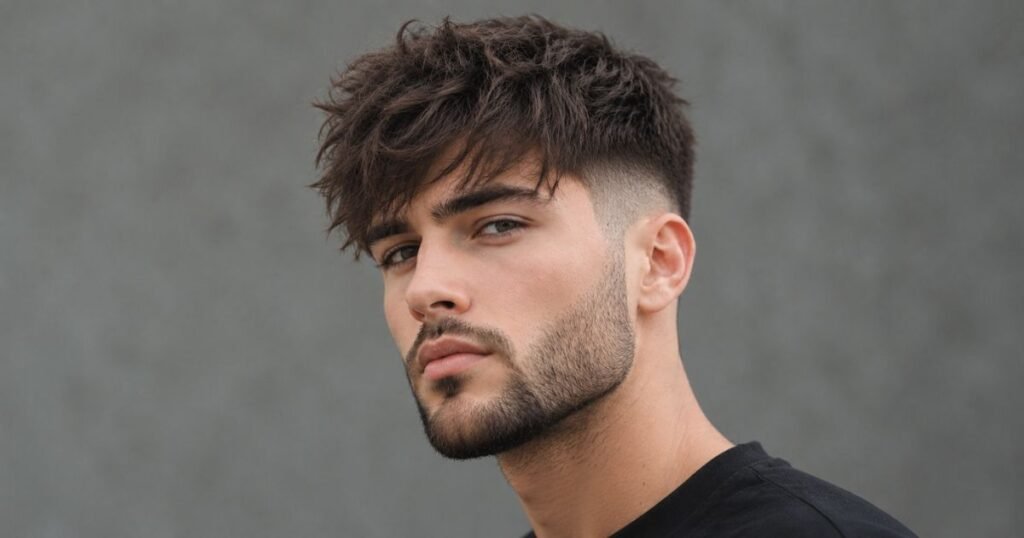
A messy fringe skips the combed, sleek finish in favor of a tousled, undone look. It is popular because it takes almost no time to style. Working a texture spray or sea salt spray through damp hair and letting it air dry, or roughing it up with your fingers while blow-drying, is usually enough.
Long Fringe
This version is up to the eye or just above the eye, allowing for layering, side sweeping, or a curtain effect. It’s a more daring style that requires a bit more care to prevent split or uneven ends, but it offers plenty more options when it comes to styling.
Curtain Fringe
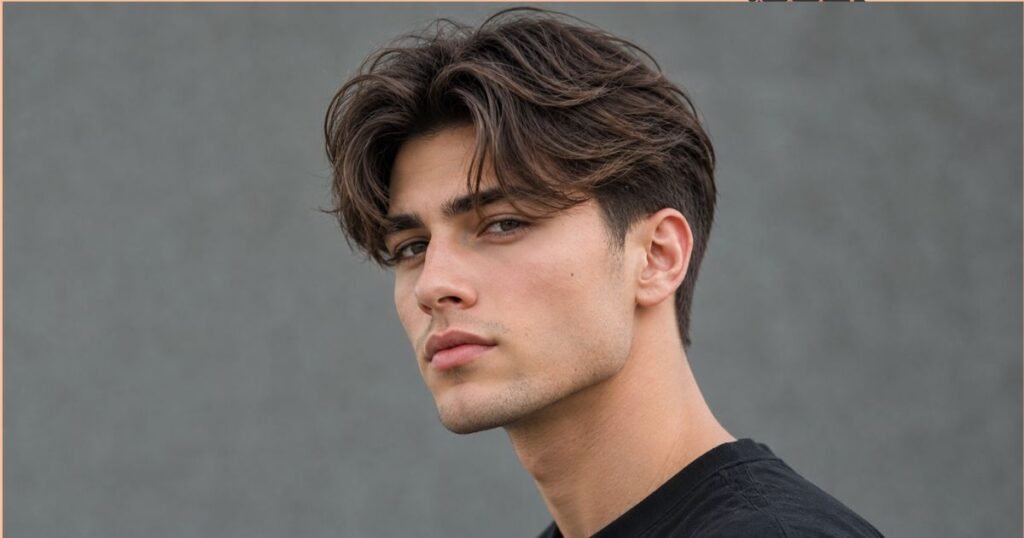
A curtain fringe is parted in the center and cascades to either side of the face, creating an even frame. This style is popular in the past decades and has come back in fashion, especially among men with wavy hair, as the natural part and the slight wave contribute to it staying in place.
Fringe with Fade
Any level of fade, high, mid, low, or skin, paired with a fringe, offers great contrast and a contemporary silhouette. A low or mid fade works better for more conservative or professional looks, and a high or skin fade is more daring. This combination is particularly flattering for thick, straight hair, as the fullness on top complements the close cut on the sides.
How to Choose the Right Fringe for Your Face Shape
Picking a fringe that suits your face shape makes a real difference in how the cut looks once it grows out from the barbershop and into your daily life.
Round Face
For a round face, the goal is to add height rather than more width. A textured fringe with volume at the root, or a side-swept version, helps break up the natural curve of the face. A full, blunt fringe sitting low across the forehead usually is not the best choice here, since it can make the face look wider.
Square Face
Swept sides are more in balance with square faces than straight, blunt ones, since the sides are already well-defined. Textured fringes that have rounded ends also work well for the same reason.
Oval Face
Oval faces are considered to be the most balanced face shape, and nearly any fringe style will work for them. Men with oval faces can really go with anything, whether it’s a classic, straight cut fringe, a messy textured fringe, or a longer, bolder fringe.
Long Face
A longer face benefits from a fuller, straight-across fringe, since it visually shortens the face and adds width at the front.
Fringe Haircuts by Hair Type
Your natural hair texture plays a big role in how a fringe holds up day-to-day.
Straight Hair
Straight hair works well with sleeker, blunt fringes, as there’s no need for product to hold them in place. A pomade or a light clay will provide sufficient hold.
Wavy Hair
Wavy hair can look great on its own, and it pairs well with a fringe that’s textured or swept to one side. A texture paste will help to keep the wave moving without flattening.
Curly Hair
Curly hair is particularly suited to styles with messy or textured fringe, which embrace the natural movement of the curls. Use a curl cream and diffuse the hair during drying to help maintain the curls rather than frizzy hair.
Thick Hair
Thick hair is often unmanageable or heavy without thinning. A matte clay provides hold without bulkiness, and asking your barber to use texturizing shears or a razor on the fringe will prevent bulkiness.
Thin Hair
A blunt or semi-blunt fringe is ideal for fine or thin hair, as heavy layers can give a sparse appearance. For volume, use a light thickening powder or fiber spray at the roots; heavy waxes and pomades will weigh down the hair.
How to Style a Fringe Haircut
Having a good cut is only half the job. It’s sharp when it is styled properly and flat when it is not.
- Do not use soaking wet hair. Do not use wet hair as it is.
- Finger evenly through the roots to the ends a small amount of product.
- Use a blow dryer to dry hair, directing it towards the front, side, or up, depending on the desired appearance, and use a round brush or fingers to push the fringe back.
- Maintain the shape for a couple of seconds until it sets.
- If more hold during the day is desired, a few drops of hairspray or texture powder can be used sparingly.
Best Products for a Men’s Fringe
The right product depends on your hair type and the finish you are going for.
Matte clay works well for textured or messy fringes and gives a strong hold without shine. Pomade suits sleeker, straighter fringes and adds a bit of shine along with medium to high hold. Texture paste is a good fit for wavy or curly hair, since it holds without stiffening the natural movement. A sea salt spray adds volume and a beachy texture, and dry shampoo is useful between washes to cut down on oil and add some grip back to the roots.
As a general rule, straight hair responds best to pomade or clay, curly hair benefits from curl cream or texture paste, and fine hair should stay away from heavy waxes.
Explore More: Curly Mullet Haircut: A Complete Guide for Men With Natural Curls
Maintenance Tips to Keep It Looking Sharp
A fringe sits front and center, so it tends to need more regular attention than a standard short cut.
Wash your hair with a lightweight shampoo so product buildup does not weigh the fringe down. Trim it every three to five weeks to stop it from growing into your eyes and losing its shape. Use product sparingly, since too much can make even thick hair look greasy by midday. Blow-dry the fringe forward and downward each morning to keep training it into place, and keep the sides maintained on a regular schedule so the contrast with the fringe stays clean.
How Often Should You Trim a Fringe
Most men need a trim every three to five weeks. Because the fringe sits right at eye level, it grows out faster in a noticeable way compared to the rest of the haircut. Waiting too long between trims usually means the fringe starts covering the eyes or losing its original shape, so keeping a fairly regular schedule with your barber makes a real difference in how the style looks week to week.
Fringe Haircut and Receding Hairlines
If you have a receding hairline, a longer fringe with a textured cut that’s brushed forward can help soften the look, as it naturally falls over the temples and the front of the scalp. It will not prevent hair loss, but it is a practical option for men who do not want to shave their entire heads. Discussing the length to leave at the front and how to layer it can help the style appear natural and not conceal something.
Conclusion
Men who want to alter their style but don’t want to cut their hair very short or lose any length can opt for a fringe haircut. It can be used in straight, wavy, and curly hair, and there is a variant for almost every face shape, ranging from a classic blunt cut to longer, textured hair with a fade.
The two most important things are selecting a version that really fits your face shape and hair type, and regular trims to prevent the shape from falling off between appointments.
Discuss the desired look with your barber, use a picture as a reference, and tell him how much time you are willing to dedicate to styling every day. Just that conversation will save you from having a great fringe on day one and a messy one by week three.
Frequently Asked Questions
What does fringe haircut for men mean?
It’s a style that involves having longer hair on the front and shorter hair on the sides, typically a fade or taper.
What is the best time to cut a fringe?
Most men shave their sideburns at regular intervals to keep them from getting in the way of their eyes and to keep them neat.
Does a fringe look good with balding at the crown?
Yes. The longer and textured fringe can be brushed forward and used to cover the temples, and it will make the hairline look less receding, but it will not prevent hair loss.
What is the best hairstyle for curly hair?
Fringes with some mess or texture work well on curly hair, as they go with the flow of the curls, rather than against them.
.