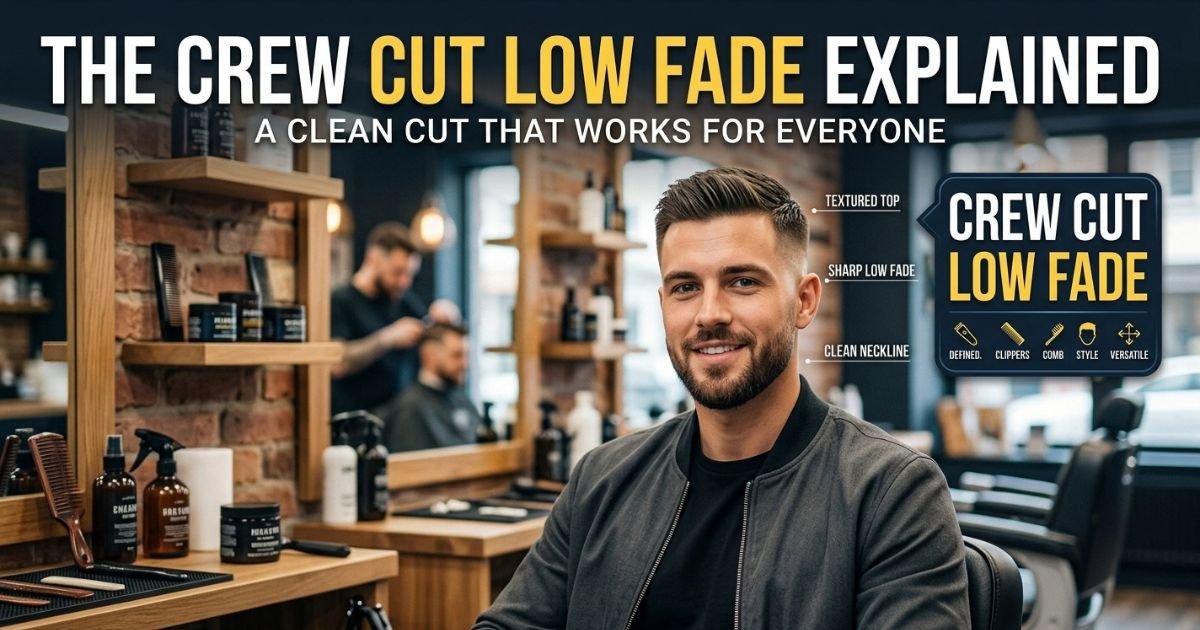
The Crew Cut Low Fade Explained: A Clean Cut That Works for Everyone
If you want a haircut that looks sharp at the office and still feels relaxed on the weekend, the crew cut low fade is one of the safest choices out there. It keeps the top short and manageable while the sides taper down cleanly near the ear. There is nothing loud about it, yet it still looks put together every single day.
This guide walks through everything you need to know before your next barber visit. We will cover what the cut actually is, which face shapes and hair types suit it best, the most requested variations, and exactly how to describe it to your barber so you get the same result every time.
What Is a Crew Cut Low Fade
A crew cut is one of the oldest men’s hairstyles around. It started in American Ivy League rowing teams, where short hair kept things practical during training. Over time, it moved from the boathouse to barbershops everywhere and became a standard cut for men who want something neat without much fuss.
The low fade part refers to where the tapering begins. Instead of fading high on the side of the head, the blend starts closer to the ear and the nape of the neck. This keeps more length on the sides compared to a mid or high fade, which gives the whole style a calmer, more balanced look.
Put the two together, and you get a haircut with a short, textured or flat top that flows into a gentle taper near the hairline. The transition is smooth rather than sharp, so there is no obvious line separating the top from the sides.
How It Differs From Mid and High Fades
A mid fade starts around the middle of the head, above the ear, and creates more contrast. A high fade starts even higher, close to the temple, and gives a bold, almost shaved appearance on the sides. The low fade sits lower than both, so it reads as more traditional and less dramatic. Men who work in conservative environments, or who simply prefer a subtle change from a regular haircut, tend to lean toward the low version.
Why Men Choose the Crew Cut Low Fade
There are a few practical reasons this cut keeps showing up on barbershop request lists.
It suits almost every hair type, from straight to curly. It grows out evenly, which means fewer emergency trims between appointments. It works with or without a beard, and it looks just as good under a cap or helmet as it does bare. Most importantly, it does not demand daily styling. A quick comb or a small amount of product is usually enough to keep it looking finished.
Best Face Shapes for a Crew Cut Low Fade
While this cut works on nearly everyone, small adjustments make it fit certain face shapes even better.
| Face Shape | What Works Best |
|---|---|
| Oval | Almost any top length works well here. A bit of texture adds natural movement without changing the balance. |
| Square | The low fade softens the temple area while still showing off a strong jawline. |
| Round | A little extra height at the crown helps elongate the face and avoids adding width. |
| Diamond | Keep the sides close but avoid going too tight, since this can highlight narrow temples. |
| Oblong | A shorter top paired with calm, unexaggerated sides keeps proportions even. |
| Heart | A slightly longer top with a soft, low taper avoids drawing attention to a wider forehead. |
If you are unsure which category you fall into, most barbers can tell within a minute of looking at you, so it is worth asking during your consultation.
Which Hair Types Work Best
Straight hair tends to lie flat, so adding a touch of texture on top keeps it from looking pressed down. Wavy hair benefits naturally from the fade, since the tapered sides reduce bulk and prevent the waves from puffing out. Curly hair looks best when the crown is kept relatively flat, letting the curls sit neatly on top instead of expanding outward. Thick hair often needs weight removed at the sides so the fade blends properly, while thin hair usually looks fuller when the top is left with a bit more length and light texture.
None of these are strict rules. They are simply starting points for the conversation with your barber, who can adjust based on how your hair naturally grows and falls.
Explore More: Straight Hair Mullet Guide: Best Styles, Tips, and How to Ask Your Barber
Popular Crew Cut Low Fade Variations
Here are the versions men ask for most often.
Classic Crew Cut Low Fade
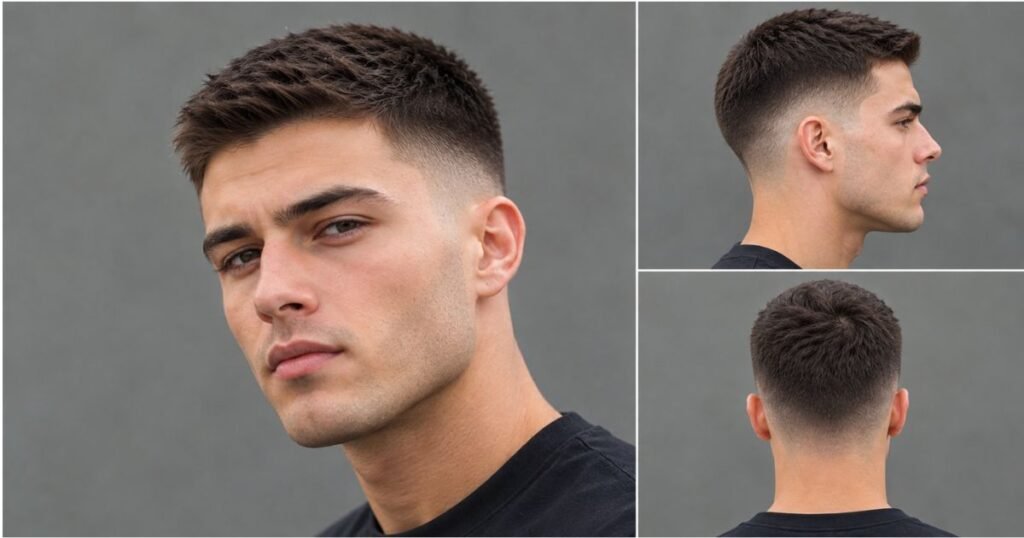
Short, even top with a smooth blend near the ear. No texture, no drama, just a clean everyday look that works in almost any setting.
Textured Crew Cut Low Fade
The top is left slightly longer and cut with texturizing shears so it has movement rather than lying completely flat. This is a common request among younger men who want something a little more current.
Crew Cut Low Fade with Beard
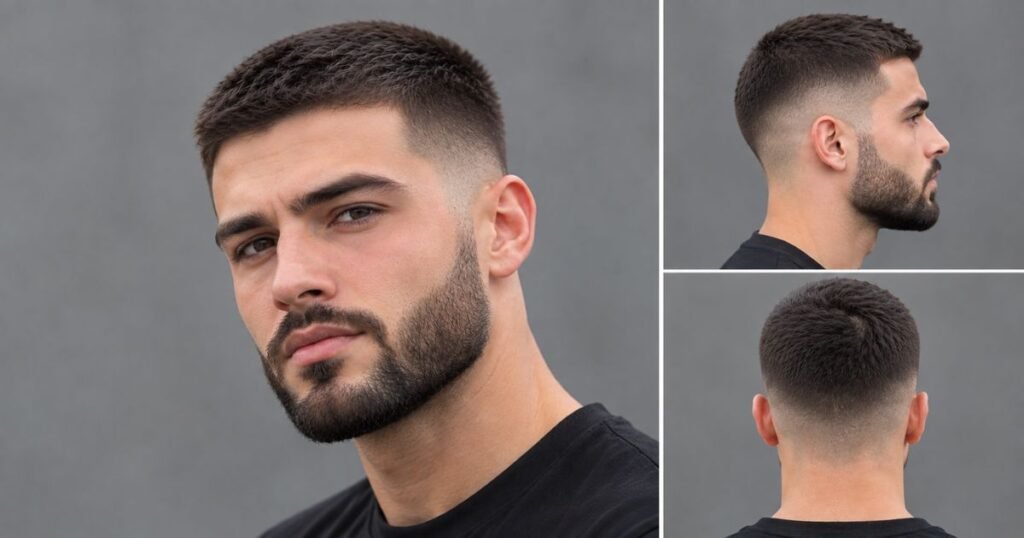
The fade on the sides is mirrored along the cheek line of the beard for a matched, balanced finish. This pairing is popular for formal photos and events because it frames the jaw well.
Crew Cut Low Fade with Line Up
A sharp, straight edge is cut along the forehead and temple. It gives the whole style a crisper outline and is often requested before important occasions or photo shoots.
Skin Low Fade Crew Cut
The sides fade all the way down to bare skin at the base before softening as it moves upward. This creates stronger contrast than the classic version and holds its shape a little longer between trims.
Crew Cut Low Fade with Hard Part
A thin shaved line marks where the part sits, giving the style a bit more structure and personality without requiring much extra styling time.
Messy Crew Cut Low Fade
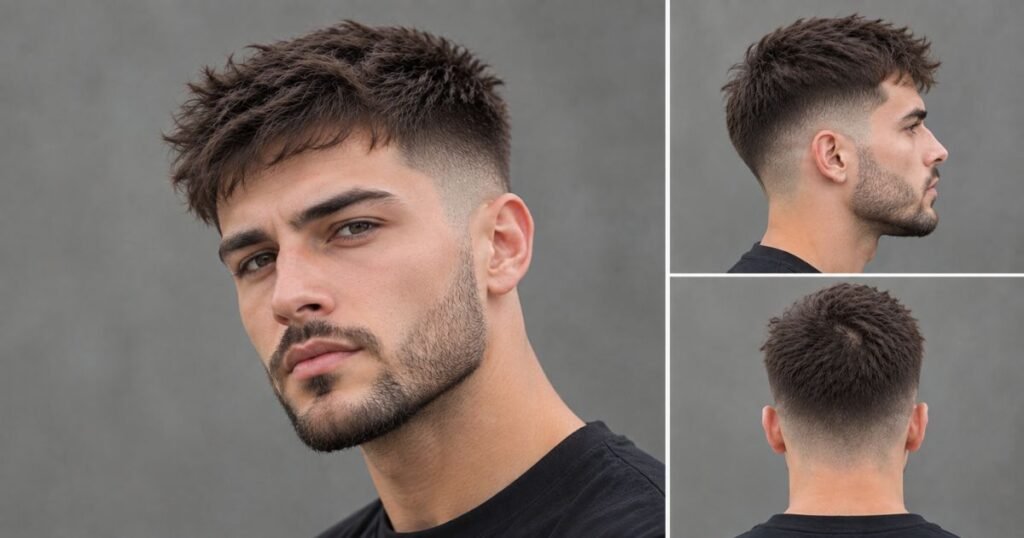
The top is left longer and worked into loose, natural pieces rather than combed flat. The outline stays tidy, so it still reads as intentional rather than unkempt.
Crew Cut Low Fade for Receding Hairline
Keeping the sides and back very short with a soft blend draws less attention to a receding hairline. A bit of length left at the front can also help balance the overall shape.
Crew Cut Low Fade for Thin Hair
Shorter layers on top with light texturizing help thin hair appear thicker, while the low fade keeps the sides from looking sparse in comparison.
Curly Crew Cut Low Fade
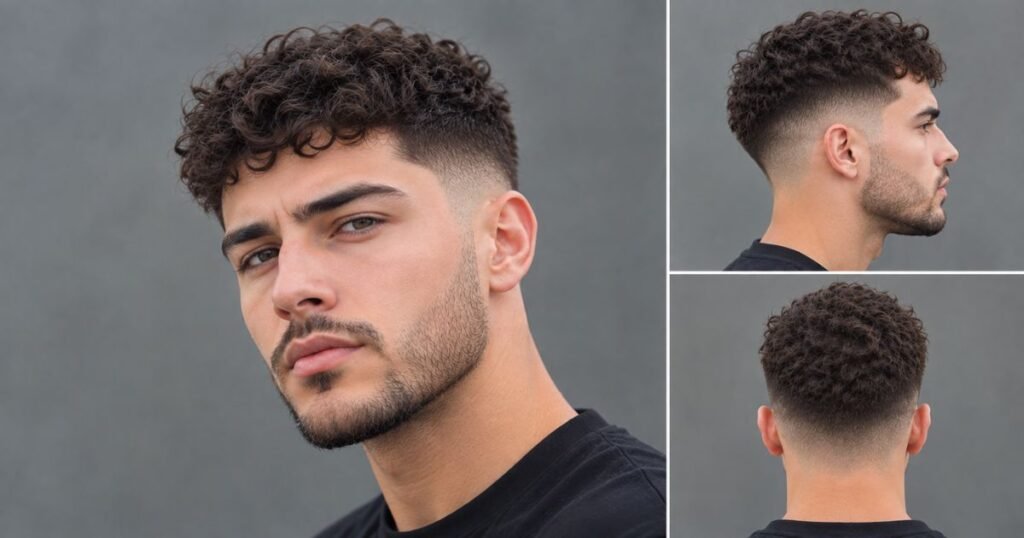
Curls are kept short, and some weight is removed from the crown so the natural pattern shows without becoming too heavy. This version also handles humidity better than most longer curly styles.
How to Ask Your Barber for a Crew Cut Low Fade
Barbers appreciate clear direction, especially with fades since the placement matters a lot. Try something along these lines when you sit down for your appointment.
“I would like a crew cut with a low fade. Keep the top short with a little texture. Blend the sides down to a true low fade near the ear and nape, nothing too high. Keep the neckline natural. If you want a beard fade, line up, or hard part, mention it here as well. It also helps to ask your barber to write down the guard numbers used on the sides so you, or any barber, can repeat the exact same cut next time.
Styling Tips and Products
This cut rarely needs more than a few minutes of effort. Start with damp, towel-dried hair rather than soaking wet. Comb or brush the top in the direction you want it to sit, then blow-dry lightly from the roots. A small amount of matte pomade or texture clay is usually enough to hold shape without looking greasy. For a softer, more relaxed finish, simply run your fingers through instead of using a comb.
Men with curly or wavy hair often do better with a lightweight cream that defines the natural pattern rather than a heavy product that weighs it down.
How Often to Get a Trim
The low placement of the fade is one of the reasons this cut is popular among men who cannot get to the barbershop every two weeks. Because the blend starts lower on the head, it grows out more gracefully than mid or high fades. Most men can go four to five weeks between full trims, though a quick neckline and sideburn tidy-up every couple of weeks keeps the edges looking sharp in between.
Cost of a Crew Cut Low Fade
Pricing varies quite a bit depending on location and the barbershop itself. In most areas, a standard crew cut low fade falls in the same price range as a regular men’s haircut, typically between twenty and forty dollars at a local barbershop. Adding extras like a beard trim, hot towel, or lineup usually adds a small amount on top. Premium or specialty barbershops in larger cities can charge more, so it is worth checking pricing ahead of time if you are trying a new place.
Crew Cut Low Fade vs Other Popular Fades
Compared to a mid fade, the low version leaves more hair on the sides and creates a softer transition, which many consider more office-appropriate. Compared to a high fade, it is far less dramatic and easier to grow out without needing constant maintenance. Compared to a taper fade, which blends very gradually with no distinct fade line at all, the low fade offers a bit more visible contrast while still staying understated. If you are choosing between them, think about how often you can realistically get to the barbershop and how bold you want the sides to look.
Conclusion
The crew cut low fade remains one of the most practical and versatile haircuts a man can choose. It works across nearly every face shape and hair type, requires minimal daily upkeep, and adapts easily whether you prefer it classic, textured, bearded, or paired with a sharp lineup. Bring this guide along to your next barbershop visit, note down your guard numbers, and you will have a reliable, sharp-looking cut ready to repeat every time you sit in the chair.
Frequently Asked Questions
Does a crew cut low fade suit thick or curly hair?
Yes. In fact, thick and curly hair often looks cleaner with a low fade because the tapered sides remove bulk while the top keeps the natural texture intact.
How is a crew cut low fade different from a regular crew cut?
A standard crew cut usually has tapered sides without a defined fade line. Adding a low fade simply gives the sides a smoother, more gradual blend that starts closer to the ear.
Can I still style this cut without using any product?
Absolutely. A simple towel dry and a comb through is enough for most everyday looks. Product is only needed if you want extra texture, hold, or a more polished finish for a specific occasion.