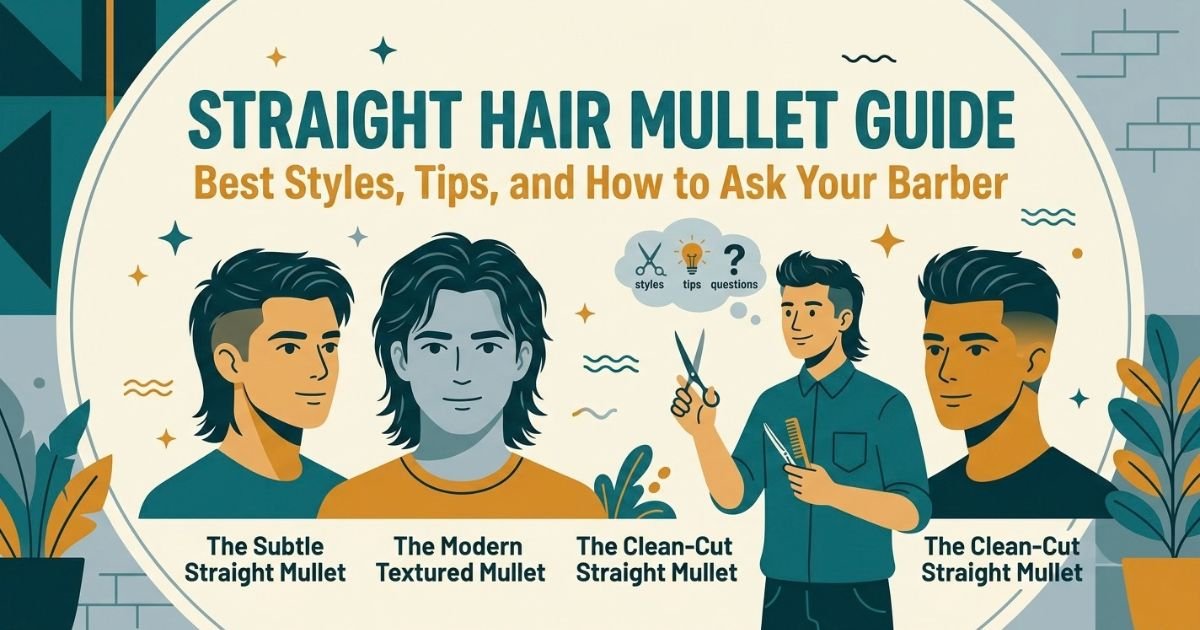
Straight Hair Mullet Guide: Best Styles, Tips, and How to Ask Your Barber
The mullet is no longer a joke cut from the eighties. It has quietly become one of the most requested styles in barbershops again, and straight hair happens to be one of the best textures for pulling it off cleanly. If you have been thinking about trying a straight hair mullet but are not sure where to start, this guide walks you through everything, from the different variations to styling and upkeep.
What Is a Straight Hair Mullet
A straight hair mullet keeps the traditional mullet shape, short on the top and sides, longer at the back, but built on hair that lies flat instead of curling or waving. Because straight strands do not add natural volume, every cut line shows exactly where the barber placed it. That is both the advantage and the challenge of this style.
On curly or wavy hair, small mistakes in the cut get hidden by the natural texture. On straight hair, there is nowhere to hide. A clean straight hair mullet looks sharp and deliberate. A rushed one looks uneven almost immediately. This is why picking the right barber and being clear about what you want matters more with this hair type than most others.
Why Straight Hair Works So Well for a Mullet
Straight hair holds its shape without much interference. There is no frizz pulling the lines out of place and no curl pattern changing the length as it dries. This gives the mullet a crisp, structured look that is harder to achieve with other hair types.
There are a few practical reasons this texture suits the cut so well.
The contrast between the short sides and the longer back reads more clearly on flat hair. The line where the two lengths meet stays visible instead of blending into waves. Straight hair also grows out in a more predictable pattern, so the mullet keeps its shape for longer between trims. Styling is simpler too, since straight hair usually needs less product to sit correctly compared to curly textures that need extra definition.
The one thing to watch for is flatness at the crown. Straight hair tends to lie close to the scalp, so a mullet without any lift on top can look thin or one-dimensional. A little texture or a slight lift at the crown usually fixes this.
Popular Straight Hair Mullet Styles to Try
There is not just one version of this cut. Depending on your hair length, face shape, and how bold you want to go, there are several directions to take it.
Classic Straight Mullet
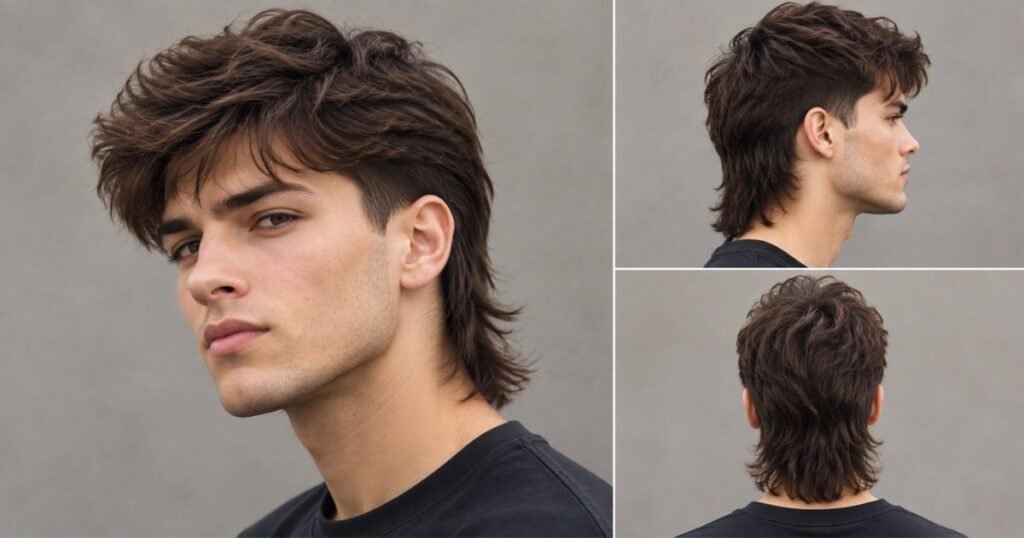
This is the closest to the original shape, short at the front and sides with noticeably longer hair left at the back. It works well on medium to thick straight hair and gives that clean, retro feel without looking dated. Keep the front slightly textured so it does not sit too flat against the forehead.
Taper Mullet for Straight Hair
Instead of a hard shave on the sides, the taper mullet blends gradually from short to long. This makes it more wearable in professional settings since it does not scream mullet at first glance. It is a good starting point for anyone trying the style for the first time and unsure how much length to keep.
Mullet with Straight Bangs
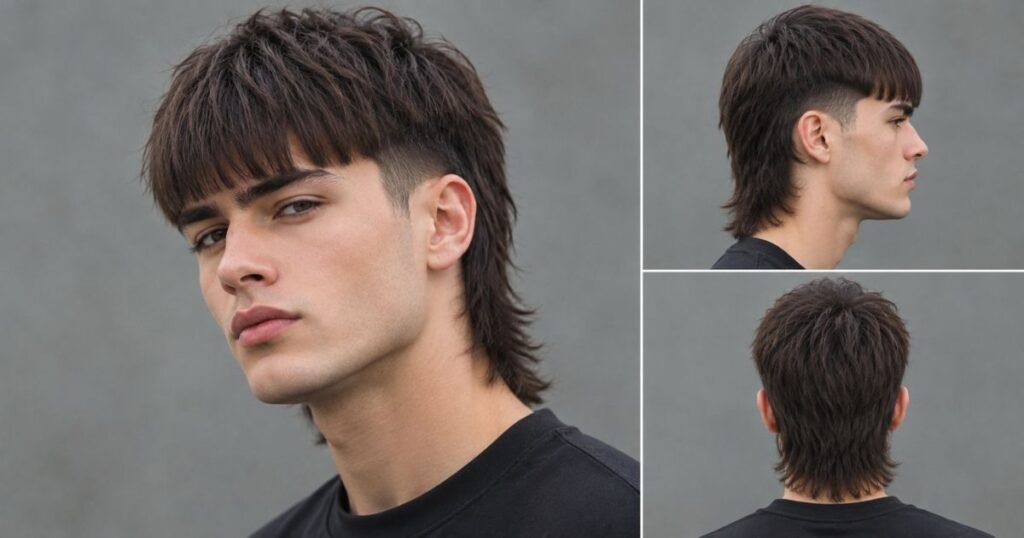
Also known as the fringe mullet or a style close to the Edgar mullet, this version pairs a blunt, straight fringe across the forehead with short sides and a longer back. It has become popular partly through social media and suits straight hair particularly well because the fringe stays crisp and does not curl upward during the day.
Long Straight Mullet
For those who do not want to lose much length, the long straight mullet keeps more hair at the back, sometimes reaching the shoulders, while the top and sides stay shorter. This works best on thicker hair, since fine straight hair can start to look stringy once it grows past a certain length.
Short Straight Mullet
A more subtle take where the back length is kept short as well, just longer than the sides. This is the easiest version to maintain and the least dramatic, making it a good option for people who want to test the mullet shape without committing to a big style change.
How to Choose the Right Mullet for Your Face Shape
Face shape plays a role in how a mullet sits, just like with any other haircut.
Round faces usually benefit from added height at the crown, since this elongates the face and balances out the width. Square faces tend to suit a mullet with softer, textured edges rather than sharp, blunt lines, which helps soften strong jaw features. Oval faces have the most flexibility and can generally wear most mullet variations without issue. Longer face shapes look better with a bit more width or volume through the sides rather than height, to avoid making the face appear even longer.
None of these are strict rules. A good barber will look at your actual features and adjust the proportions rather than following a formula blindly.
How to Ask Your Barber for a Straight Hair Mullet
Communication matters a lot with this cut, since the word mullet alone can be interpreted in many different ways. It is worth bringing a reference photo and being specific about a few details.
Mention how short you want the sides, whether that is skin faded, a low fade, or simply tapered with scissors. Be clear about how much length you want left at the back, whether that is collar length, shoulder length, or somewhere in between. Decide if you want the top to blend smoothly into the sides or stay disconnected for a more noticeable contrast. Finally, mention whether you want a fringe or bangs at the front, and if so, how blunt or textured it should be.
Giving this level of detail avoids the most common complaint people have after getting a mullet, which is that it did not turn out the way they pictured it.
Styling Tips for a Straight Hair Mullet
Straight hair is generally easier to style than curly hair, but a mullet still needs a bit of technique to look its best.
Start by rough drying the top and crown with your fingers, pushing the hair upward rather than letting it dry flat. This prevents the top from looking thin or lifeless. A small amount of texturizing product, such as a light clay or sea salt spray, helps create separation and stops straight strands from sticking together in one flat sheet. For the back and longer sections, a leave-in conditioner or light serum keeps the ends looking healthy rather than dry or brittle. If you prefer a slicked-back look for more formal occasions, a light pomade works well on straight hair since it distributes evenly without extra effort.
Avoid overloading the hair with heavy products. Straight hair does not need much to hold its shape, and too much product can weigh it down and undo the lift you are trying to create at the crown.
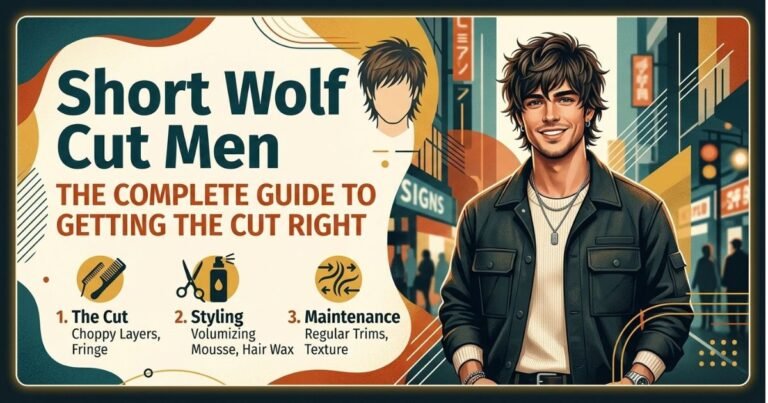
Explore More: Short Wolf Cut Men: The Complete Guide to Getting the Cut Right
Best Products for Straight Hair Mullets
A few product types consistently work well for this haircut.
Texturizing clay or paste adds grip and separation, especially through the top and fringe area. Sea salt spray is useful for adding a bit of grit and volume without making the hair feel stiff. Light hold pomade is ideal if you want a cleaner, more controlled finish on the front while keeping the back natural. A heat protectant is worth using if you blow-dry regularly, since straight hair can dry out with frequent heat styling.
You do not need a large collection of products. One texturizer and one lightweight styling cream is usually enough to maintain the shape day to day.
Maintenance and Upkeep
How often you need a trim depends on which version of the mullet you choose. Styles with a hard fade or skin fade on the sides need attention every three to four weeks, since regrowth on the sides is more noticeable than at the back. Tapered versions can stretch to five or six weeks between trims. The back length usually only needs a light trim every couple of months, just enough to keep the ends healthy without losing the length you are growing out.
Washing straight hair mullets two to three times a week, rather than daily, helps prevent the hair from becoming too dry, particularly if you are using styling products regularly.
Common Mistakes to Avoid
A few issues come up often with straight hair mullets. Letting the top sit completely flat without any texture is one of the most common, since it makes the whole cut look unfinished. Going too short on the sides while keeping a lot of length at the back can create an unbalanced look, especially on thinner hair. Skipping regular trims on the sides is another frequent mistake, since regrowth there tends to blur the clean lines that make this haircut work in the first place.
Conclusion
A straight hair mullet is one of those haircuts that rewards precision. The flat texture of straight hair shows off clean lines in a way that other hair types cannot quite match, which is exactly why the style has made such a strong comeback.
Whether you go for a subtle taper, a bold fringe mullet, or the classic long back version, the key is choosing a shape that fits your hair thickness and face shape, communicating clearly with your barber, and keeping up with regular trims to maintain the contrast. Done right, it is a haircut that looks intentional rather than accidental, and one that continues to hold up well as a genuine modern style rather than a passing trend.
Frequently Asked Questions
Does a straight hair mullet suit all hair thicknesses?
It works best on medium to thick hair, since thicker strands hold the shape and the length at the back without looking sparse. Fine straight hair can still work well, but it is often better paired with a shorter back length so the ends do not look thin.
How long does hair need to be before getting a mullet?
Most barbers recommend having at least three to four inches of length at the back before starting the cut. This gives enough to work with for shaping the back section while keeping the front and sides shorter.
Is a straight hair mullet high maintenance?
It depends on the version. A hard faded mullet needs trims every few weeks to stay sharp, while a softer taper mullet is much lower maintenance and can go longer between visits to the barber.