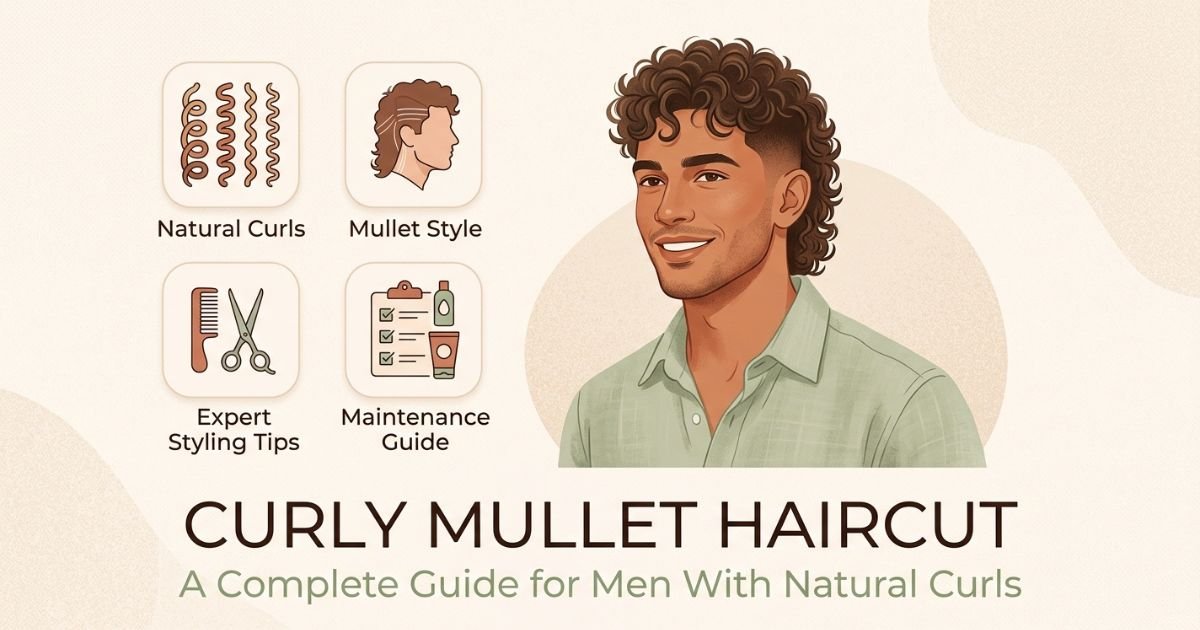
Curly Mullet Haircut: A Complete Guide for Men With Natural Curls
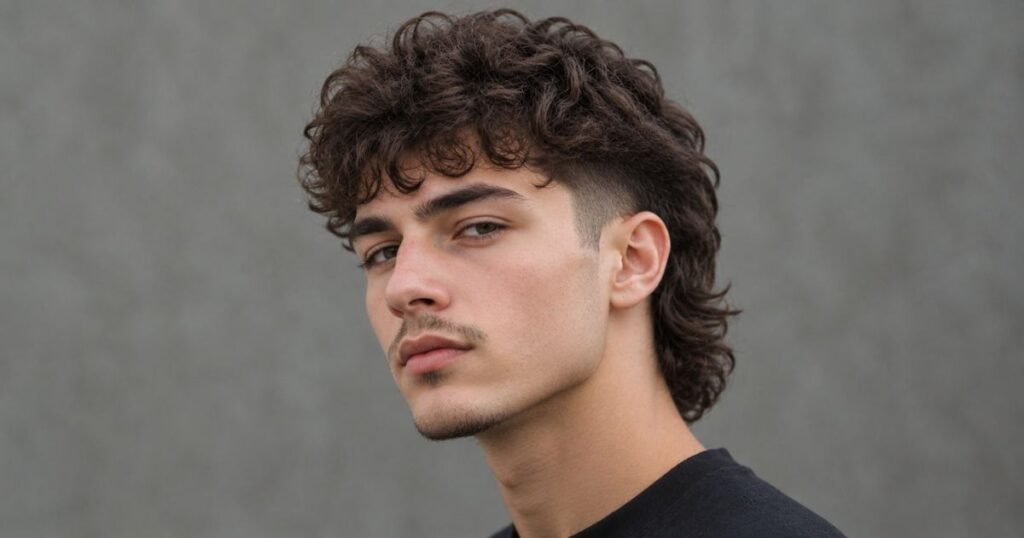
The curly mullet haircut is a great option for people with curly hair who are tired of the same short sides they have been getting from their barber. It isn’t the big backside of the 80s. Today’s version of the men’s version is sleeker on the sides, more intentional in layers, and more designed to work with curls than against them.
This guide is going to explain what the curly mullet is, why it is perfect for hair with curls and waves, the most popular curly mullet styles, and how to maintain it between salon visits.
What Is a Curly Mullet Haircut
The curly mullet takes the concept of the traditional mullet, which is short up front and long back, and applies it to curly hair. Sides are typically tapered or faded and not long and shapeless. Cut with layers on top and back to allow for the natural curl pattern.
This leaves a cut that appears put together, not grown out. Curls already have volume and shape, so a mullet cut for curly hair doesn’t require a lot of styling to achieve the end result that a straight-hair mullet might require.
Why Curly Hair and the Mullet Shape Work So Well Together
Your Natural Texture Becomes the Main Feature
It is a fact that for most men with curly hair have been trying for years to straighten or control their hair. A curly mullet turns that around. The point of the haircut is the curl pattern, not hiding of it. The tighter the curls, the more volume at the crown, and the looser the curls, the more relaxed and tousled the back will appear.
It Asks Less of Your Morning Routine
A straight hair mullet typically requires a straightening iron or blow dryer to keep its shape. Curly hair does the majority of that work all on its own. This is one of the reasons why this cut is so popular among men who don’t want to spend a lot of time on their hairstyles, as it can be finished with a bit of curl cream, some scrunching, and an air-dry.
It Reads as Current, Not Retro
Paired with a fade or an undercut, a curly mullet has an edge to it without looking like a costume from an old photo. It works for a casual weekend look, and styled a bit more neatly, it can hold up in more buttoned-up settings too.
Popular Curly Mullet Variations
There is no single way to wear this cut. Here are the versions barbers report cutting most often.
Curly Mullet With a Fade
Short, faded sides, with full curl volume on top and through the back. If you are new to mullets, this is a great place to start as the sides are kept clean while the back is a moderate length.
Permed Mullet
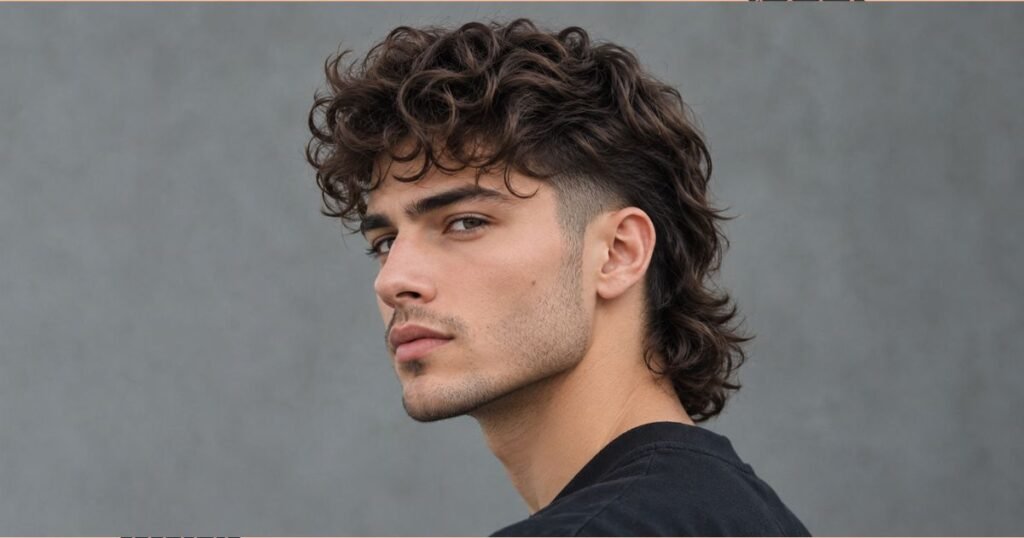
If your hair is naturally straight but you want the look, a light perm can add the curl pattern needed to pull it off. Most barbers recommend a looser perm rather than tight, uniform curls, since a natural-looking wave tends to suit the mullet shape better than an obviously permed texture.
Curly Mullet With an Undercut
Instead of a gradual fade, the sides are cut close in one clean line. This creates more contrast against the curls up top and tends to suit men who want a bolder, more defined look.
Shag Curly Mullet
Heavy, uneven layers all through the top and back give this version a loose, lived-in feel. It leans into the rock and roll roots of the mullet and works particularly well on medium to thick curls that can carry the extra volume.
Baby Curly Mullet
A shorter, more subtle take where the back barely extends past the neckline. This is a practical option if you work in a conservative environment or if you are just starting to grow your hair out and want to ease into the style.
Choosing a Curly Mullet Based on Your Curl Pattern
Not every version of this cut suits every curl type. It helps to think about your hair texture before deciding on a style.
If you have loose waves, a shag mullet or a softer curtain style will show off gentle movement without needing much product. If your curls are more defined, a classic curly mullet with a fade gives you controlled volume without the hair looking heavy. Tighter coils tend to look their best in a fuller, high-volume mullet, since the extra layering gives coils room to spring back into shape instead of clumping together.
A good barber will look at how your hair naturally falls before cutting, so it is worth bringing photos of the exact style you want, along with an honest look at your own curl pattern.
Explore More: Bleached Buzz Cut: The Complete Guide to Getting It Right
Curly Mullet Options by Face Shape
The right layering can make all the difference in the world as far as how the final cut will look on your face.
A mullet with longer length at the crown and shorter sides is a good option for round faces to give them vertical height and to break up the roundness. Softer, rounded layers around the jaw help to soften the edges of the jaw for square faces. Oval faces offer the widest range of possibilities and can be styled in virtually any way, such as a longer, more expressive mullet. A low taper or shorter baby mullet is ideal for longer faces because it will not give the face an overly elongated appearance.
How to Ask Your Barber for a Curly Mullet
Walking into a salon without a clear idea of what you want often leads to a cut that misses the mark. A few things help.
Bring reference photos, ideally of curly hair similar to your own texture rather than a straight-haired example. Ask specifically for short or faded sides with longer, layered length left on top and in the back. Mention that you want the cut done to work with your natural curl pattern rather than a uniform length, since curls need different layering than straight hair to hold their shape properly.
It also helps to be upfront about maintenance. If you do not want to visit the barber every four weeks, say so, since some variations need more frequent trims than others.
How to Style a Curly Mullet at Home
After the cut, styling can be relatively easy.
- Use a sulfate-free shampoo to avoid removing the natural oils that help to define curls.
- Use leave-in conditioner or curl cream on wet hair.
- Scrunch curls up with hands to promote natural clumping.
- Air dry or use a diffuser on LOW heat for increased volume at the roots.
- Apply a little gel or pomade for extra hold and shine.
Try not to dry your hair with a normal towel, as it can diminish the curl pattern and cause frizz. The water-absorbing power of a microfiber towel or an old cotton shirt is much better for gentle water absorption.
Best Products for Maintaining a Curly Mullet
With the right products, you will notice a difference in the definition of your curls between washes.
A sulfate-free shampoo will not dry out the hair, which is important for curls as compared to straight hair because natural oils don’t travel down a curl shaft as well. A leave-in conditioner will provide moisture and provide other styling products with something to grip. Curl cream can help to shape and define individual curls, while a light gel provides more lasting hold on wet days. Dry ends can be reduced and frizzed without weighing down curls with a small amount of argan or jojoba oil.
One of the basic guidelines to prevent too many products from becoming over-complicated is to use only one moisture-based product and one hold-based product for each session.
Common Mistakes to Avoid
There are some bad habits that can ruin a great cut.
Curly hair should not be washed every day, as this will remove the oils it requires; two to three washes a week is sufficient. Rough towel drying will disrupt the curl definition and result in frizz. If you don’t trim the mullet regularly, split ends will grow, creating a raggedy appearance instead of a mullet. Using too much product, especially heavy creams or oils, can flatten curls instead of defining them. Going to a barber who doesn’t have experience in the art of curl cutting is likely to lead to a haircut that looks great dry, but is soon out of place.
Maintenance Schedule for a Curly Mullet
It doesn’t take a lot to keep the shape looking fresh, but there are a few habits that will help.
Cut back on layering every 6 to 8 weeks to keep the layering and to cut back on damaged ends that may continue to move up the strand. Deep condition once a week, especially if your curls are on the drier or tighter side. Use a silk or satin pillowcase, as cotton absorbs moisture from hair and may cause curls to lose shape overnight. Tangle only when hair is wet and condition it with your fingers or a wide-tooth comb, not a brush, which can pull apart curls and cause frizz.
Conclusion
The curly mullet haircut has remained popular due to its ability to do something that most curly haircuts cannot do. Rather than work around or reduce natural texture, it embraces it. You can get a clean fade, a shaggier fade, or a shorter baby mullet; it’s all about your curl pattern, your face shape, and how much maintenance you’re willing to do.
When you’re ready to try, take photos of your references to your next salon appointment, describe the length and layering you’re after, and let your barber see your natural curl before the scissors hit the hair. If done right, this is one of the easier-to-achieve, more effective cuts you can get with curls.
Frequently Asked Questions
Is curly mullet a good choice for naturally curly hair?
Yes. The mullet style looks fuller with curly hair, as it provides volume and movement. It is actually one of the more forgiving haircuts for curls, as the layering will be done to complement the curls, not combat them.
What length hair is required for a curly mullet?
A proper mullet shape will require at least 3 to 6 months of growth at the back, depending on the preferences of the barber. If you’re not there yet, a baby mullet is a shorter version that will give you a taste of the style while your hair grows.
Can I go for a curly mullet if I have straight hair?
Yes, with a light to medium perm. Loose curls are more natural than tight curls on a mullet, and most barbers who do texture can tell you what strength of perm is best for your hair.