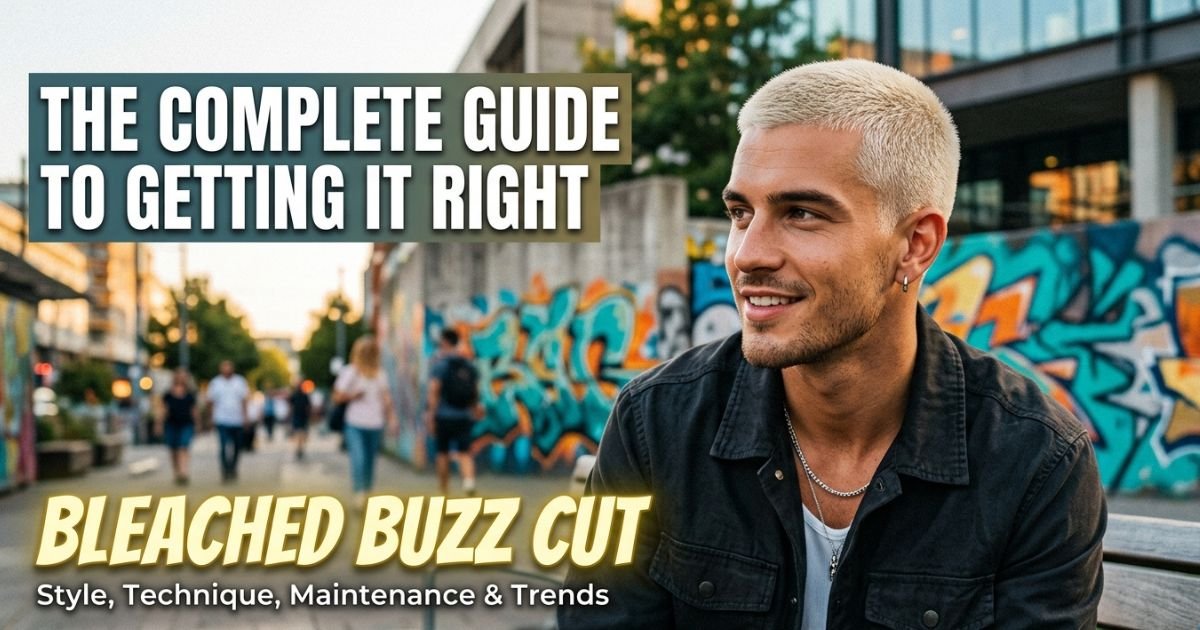
Bleached Buzz Cut: The Complete Guide to Getting It Right
One of the easiest ways to alter your entire appearance without growing out a single hair is to get a bleached buzz cut. It adds a bold color twist to an already clean and low-effort haircut, which most people will notice immediately. If you’re considering using it, or you have one and want it to look better, this guide has you covered from the basics to the little details you may have overlooked.
What Is a Bleached Buzz Cut
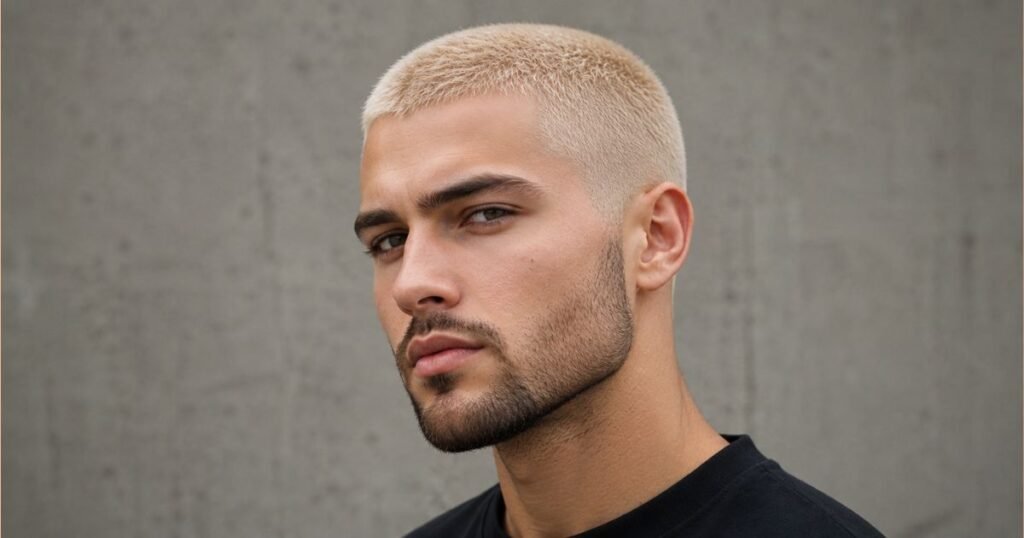
A bleached buzz cut is a short clipper cut, typically from a number 1 to a number 4 guard, that has been lightened with bleach to blonde, platinum, or near white. The cut isn’t different from a normal buzz cut. What changes is the colour, and that colour is what makes the style.
The hair is very short, and it bleaches evenly and rapidly. This is one of the reasons this style is so popular among men who are looking for a dramatic look but don’t want to commit to a long-term investment. It also grows quite rapidly and will not last long if you don’t like the color.
Why Men Choose This Style
There are a few real reasons this cut has stayed popular instead of fading out as a passing trend.
It requires almost no daily styling. A buzz cut already needs little more than a quick towel dry. Add bleach, and you still do not need blow dryers, brushes, or long routines.
It changes your whole appearance with one haircut. You do not need to grow your hair out or experiment with different lengths to look different. The color alone does most of the work.
It suits a wide range of face shapes. Short hair draws the eye toward the jawline and cheekbones, and a bright color adds to that effect rather than distracting from it.
It is easier to walk back than long bleached hair. Regrowth gets trimmed away every couple of weeks, so you are never stuck with months of damaged length.
It works well in warmer months. Less hair means less heat trapped against the scalp, which a lot of men appreciate once summer hits.
Choosing the Right Guard Length
Before any bleach touches your hair, you need to decide how short you actually want to go. The guard size changes both the look and how the bleach behaves.
A number 1 or number 2 guard gives you the most uniform, almost buzzed-to-the-skin appearance. Bleach lifts very evenly at this length, and the color reads as one solid tone.
A number 3 or number 4 guard leaves a bit more length on top. This gives the bleached hair some texture and movement instead of a flat block of color, and it is a good middle ground if you are trying this style for the first time.
Going longer than a number 4 starts to move away from a true buzz cut and into crop or textured territory, which changes how the bleach needs to be applied since longer strands process more slowly than short ones.
How to Bleach a Buzz Cut Safely
Doing this at home is possible, but the order you follow matters. Cut your hair first, then bleach it. Cutting first means there is less hair to process, and shorter strands handle the chemical stress of bleach better than longer ones.
What You Will Need
- Clippers with your chosen guard size
- Bleach powder and a developer, typically 20 volume
- A mixing bowl and tint brush
- Gloves and an old towel
- Purple or blue toning shampoo
- A deep conditioning treatment
Before starting, run a patch test on a small area of skin about 24 to 48 hours ahead. Bleach can cause allergic reactions in some people, and this step, while easy to skip, is worth the extra day.
The Application Process
- Buzz your hair to the length you want first. Go over your whole head evenly with the guard size you have chosen.
- Mix the bleach and developer according to the instructions on the product. You are aiming for a smooth, even paste, roughly the thickness of yogurt.
- Apply from the back of the head forward. Save the hairline and edges for last since natural body heat causes those areas to process faster.
- Check the color every five to ten minutes. Hair typically moves from your natural shade through red, then orange, then pale yellow before reaching the lighter tones. Short hair lifts quickly, so do not step away for long stretches.
- Rinse with cool or lukewarm water once you reach the shade you are after, until the water runs clear.
- Tone the hair to cancel out any yellow or orange left behind.
- Deep condition right away. Bleached hair loses moisture fast, and skipping this step is one of the main reasons hair ends up feeling straw-like afterward.
Never leave bleach on longer than the product instructions state, and avoid a second bleaching session on the same day if you are not satisfied with the result. Give your scalp at least a week before trying again.
Fade Styles That Pair Well With Bleach
A buzz cut on its own is already sharp, but adding a fade changes how the bleach reads visually. The transition from skin to color becomes part of the style itself.
| Fade Type | Where It Sits | Best For |
|---|---|---|
| Low fade | Close to the ears | A subtle look that still works in professional settings |
| Mid fade | Halfway up the sides | A balanced, everyday option |
| High fade | Above the temple | Strong contrast and a bolder statement |
| Skin fade | Down to bare skin | The sharpest possible contrast with the bleached top |
| Burst fade | Curves around the ear | A rounder, more athletic shape |
A low fade tends to be the easiest to maintain and the most forgiving if you are new to this style, since the transition is gentle and touch-ups are less frequent.
Toning to get the right shade
Newly bleached hair doesn’t always look clean the first time around. Most guys end up with some heat in the hair, which may be light yellow or a more pronounced orange, particularly if the natural color is dark.
This is corrected by toning. A purple-based toner or shampoo will neutralise yellow tones, and a blue-based toner will neutralise orange tones. Do not remove the toner for more than the recommended amount of time on the packaging, as it can cause the hair to turn grey or a slight lavender color. Toner fades with regular washing, so most men need to reapply it every 1 to 2 weeks, and hot water accelerates fading, so lukewarm rinses will help the tone last longer.
Explore More: Kids Taper Fade Haircuts: The Complete Guide for Parents
Keeping It Looking Fresh
A bleached buzz cut is not a big deal of work each day, but if you do a little thing each day, it will look sharp instead of dull or brassy.
Wash your hair two to three times a week rather than daily. Too frequent washing removes color and moisture from the fabric sooner than it needs to be. Use a sulfate-free, colour-safe shampoo, as normal shampoo may be too harsh for bleached hair.
Deep condition every week, as bleached hair is more porous and dries out quicker than natural hair. Regularly cut back every two to three weeks to maintain even length and prevent regrowth from being noticeable. Re-bleach every 4 to 6 weeks, but avoid re-bleaching freshly bleached hair, as this will weaken it. Last but not least, avoid excessive sun and chlorine exposure, as these elements can cause bleached hair to turn brassy and dry out.
Common Issues and How to Fix Them
A buzz cut will create a very short, even surface, so the imperfection in the bleaching process will be more noticeable than it would be on longer hair.
Bleach unevenness or patchiness is typically a result of uneven or inconsistent spreading of bleach or some areas receiving less bleach time than others. Using a tint brush to apply in small sections, instead of fingers, will help to maintain consistency throughout the entire head.
Brassy or orange tones are normal and not a sign of something gone wrong during the lifting process. A weekly purple shampoo will correct mild yellow tones, and a blue-based toner will correct stronger orange tones.
Dry or itchy scalp occurs when bleach removes natural oils as well as hair color. Washing and spacing out bleaching sessions, as well as using a light oil, helps the scalp recover.
Visible banding at the roots shows up when new growth gets bleached separately from the rest of the hair, leaving a line where the two meet. Timing touch-ups when regrowth is around an inch long, and blending carefully at the root line, keeps this from becoming obvious.
Breakage from overprocessing is the most serious issue and usually comes from bleaching too often without recovery time. Waiting three to four weeks between full sessions and using a bond-building treatment during the process both reduce the risk.
Products Worth Having on Hand
| Product | Purpose |
|---|---|
| Bleach kit with bond builder | Lightens hair while protecting its internal structure |
| Purple shampoo | Cancels yellow and mild brassy tones |
| Blue toning shampoo | Handles stronger orange undertones |
| Sulfate-free conditioner | Keeps moisture in without stripping color |
| Leave-in protein treatment | Strengthens hair weakened by bleach |
| Lightweight scalp oil | Soothes dryness after bleaching |
Conlusion
A bleached buzz cut is a fair amount of change with a minimum amount of daily effort. The haircut is simple, and the color is all the rest of the story. The difference between a look that lasts and a look that looks brassy or damaged after just a few weeks is due to a few minor habits: cut before you bleach, tone appropriately, wash less frequently, and allow your hair to recover between sessions.
If you’re trying it out for the first time, opt for a longer guard length and a lighter fade to give you some room to fine-tune as you go. Knowing how your hair will react to bleaching will help you determine if you want to go platinum, fade, or opt for something more dramatic. In any case, a bit of patience in the initial process will benefit the healthy and sharp appearance of the style afterward.
Frequently Asked Questions
Is a buzz cut for everyone?
It is suitable for most face types, as the shortness and light tone of the shade naturally accentuate the jawline and cheekbones. Round faces, in particular, look great because it helps to highlight the face.
What is the typical price for a salon?
The cost of the service is usually between fifty and a hundred and fifty dollars, depending on your natural hair color, how light you want to go, and whether you need more than one bleaching session to get there.
Will this style work with coarser or darker natural hair?
Yes, but sometimes it will require multiple sessions with a week or more in between to achieve a uniformly lightened color without overprocessing the hair if you have darker or coarser hair.
.