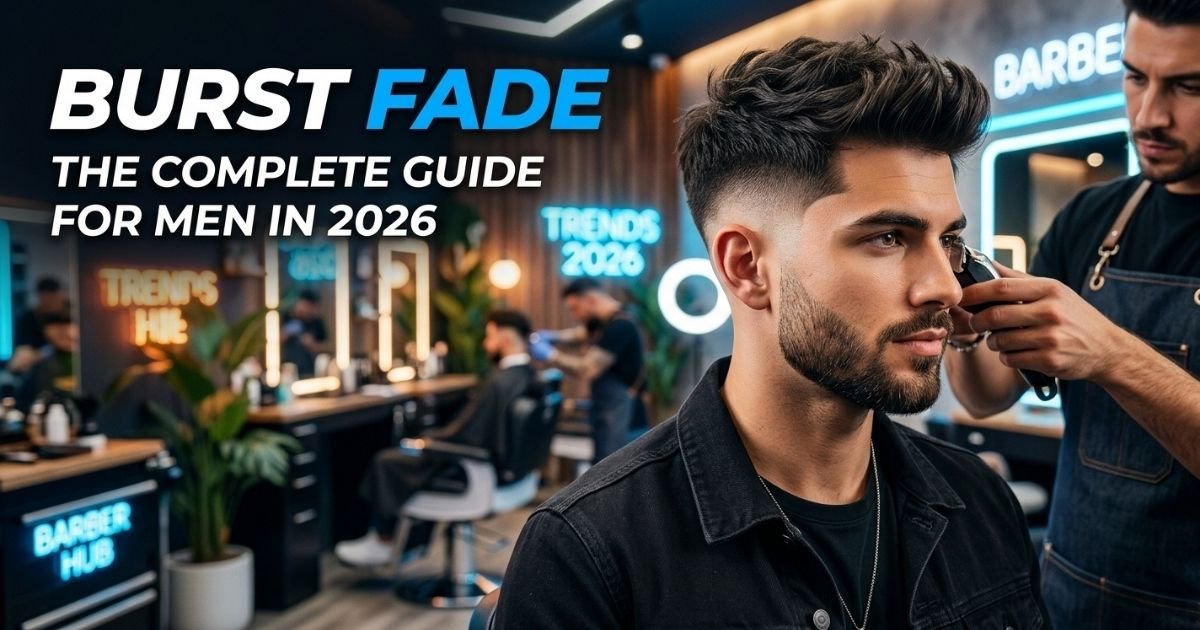
Burst Fade Haircut: The Complete Guide for Men in 2026
Burst fade hairstyles are among the most sought-after hairstyles in barbershop styling today. It has a unique appearance that is different from a regular fade, and it is suitable for nearly every type of hair – straight, curly, thick, or coily. You may have seen the photos online or heard your barber say the word, but you’re not sure exactly what it means; this guide is for you before your next appointment.
At the end of this article, you will know what a burst fade is, how it compares to other popular fades, which one is best for your face shape, the price of a burst fade, and how to clearly communicate with your barber to ensure you receive the fade that you want.
What Is a Burst Fade Haircut?
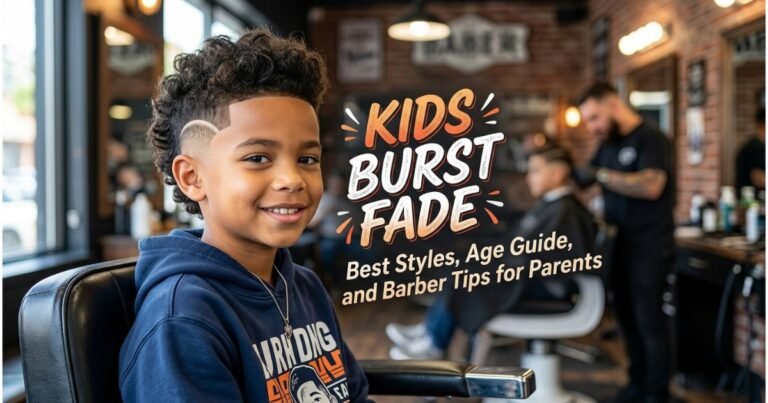
A burst fade haircut is a type of fade cut in which the hair around the ears is curved in a round shape, as opposed to a straight horizontal line like a standard fade. The hair tapers toward the ear, then fades into a semicircle; hence, barbers sometimes refer to it as a sunburst fade.
The burst fade is a fade shaped around the ear area, in contrast to a low fade, mid fade, or high fade, which cuts across the head in one continuous line. This provides a rounded cut point and helps to retain length to the back of the head, resulting in the signature burst effect of the haircut.
This style works well with several hair textures, including:
- Straight hair
- Wavy hair
- Curly hair
- Thick or coily hair
The fade is not across the side of the head, just around the ear, so barbers can be more creative with what is happening on top, whether it’s a Mohawk, a mullet, or just a textured crop.
How a Burst Fade Differs From a Regular Fade
A standard fade, low, mid, or high, is a straight or slightly curved line around the head at approximately the same level. Only a burst fade fades tightly around the ear, not the whole line around the ear. Rather, it bends back to the longer hair at the crown and neckline.
This is the primary cause for people to mix up a burst fade with a drop fade. The curve of both fades is behind the ear, but a drop fade will curve down towards the neckline, whereas a burst fade will curve out from the ear in a fuller, rounder curve. We will go into more detail on this comparison later in the article.
Why the Burst Fade Is Trending
The burst fade has been popular for several years, and there are some good reasons why it is still popular for barbers to request.
It’s stylish and not too much. The curved fade will give a clean and defined edge without having to go completely bald, which will make it look polished and not extreme.
It is very compatible with most of the top styles. The fade is limited to the area around the ear, which offers the freedom of mullets, mohawks, textured crops, curls, and slicked-back styles.
It is appropriate for young and old clients. The softer versions of the burst fade are particularly popular with teenagers and men in their twenties, but the fades will also work in the office.
It photographs well. Today, men consider social media a significant factor in their haircut selection, and the rounded appearance of the burst fade is more prominent in photos and videos than a straight fade.
Key Characteristics of a Burst Fade
Before choosing a variation, it helps to understand what actually defines this haircut.
Curved shape around the ears. The fade follows the natural curve of the ear rather than cutting a straight line across the side of the head.
More length at the back. The neckline typically stays a bit longer than it would in a standard fade, which is what produces the burst look.
Flexible top styling. The burst fade works with almost any style on top, from a short crop to a longer, textured mullet.
Adjustable fade height. As with most fades, you can choose a low, mid, or high burst depending on how bold you want the contrast to be.
A distinct silhouette. Because of the curve and the length retained at the back, the burst fade has a shape that is noticeably different from a taper or skin fade.
Types of Burst Fade Haircuts
Most barbers organize burst fades by how high the fade sits on the head. Choosing the right height depends on your comfort level with contrast and how often you are willing to get touch-ups.
Low Burst Fade
A low burst fade ensures that the fade is right at the ear and gradually transitions into the neckline. The least dramatic one and suitable for men who prefer a minimalist appearance. This is typically the safest choice when first trying a burst fade and works well in office settings, but not as well as the higher versions.
Mid Burst Fade
The mid burst fade is in the middle of the two. It provides an obvious curve and increased definition when compared to the low version, but it doesn’t create a very severe look because there is still hair over the fade. Many men opt for this as a compromise as it fits in both casual and semi-casual situations.
High Burst Fade
The high burst fade begins on the side of the head, thus providing a much greater contrast between the faded section and the hair on top. This version is more noticeable and looks great on thicker or more voluminous hair, as well as crops and pompadours. It is more popular amongst young men who are looking for a more daring, contemporary style.
Skin Burst Fade
Some men request a skin burst fade (fade down to the skin near the ear) for the best possible end to their fade. This version requires the most regular maintenance, typically every 2-3 weeks, as regrowth is quickly visible once the skin is exposed.
Popular Burst Fade Styles
Once you have decided on a fade height, the next step is picking what happens on top. Here are some of the most requested burst fade combinations.
Burst Fade Mullet
The burst fade mullet is a clean, curved fade on the sides with a longer back. It’s currently one of the most popular cuts available, as it brings a modern twist to the mullet without making it seem dated. It is used with straight, wavy, or curly hair and is particularly popular with teens and young adults.
Burst Fade Mohawk
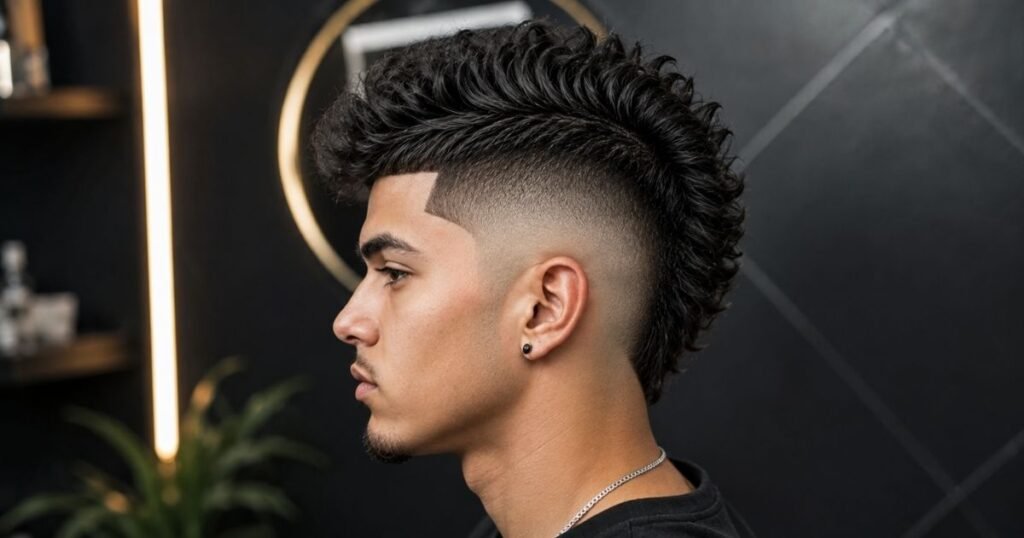
This version retains a strip of hair down the middle of the head and has the sides faded tightly around the ears. It’s a bold and eye-catching look that is frequently seen in street fashion and sports, but might not be appropriate for more traditional professional settings.
Curly Burst Fade
This style is ideal for men who have natural curls, as it helps to keep the sides clean while allowing the curls on top to stand out. A curly burst fade accentuates your natural curl pattern, rather than covering it up. Use a curl cream or a light styling product to keep the curls looking nice all day long.
Textured Burst Fade
This variation emphasizes the addition of movement and volume to the top, while maintaining sharp and clean sides. It creates a casual, slightly unruly look, but not too loose. It is best to use a matte clay or light styling powder here.
Burst Fade With Beard
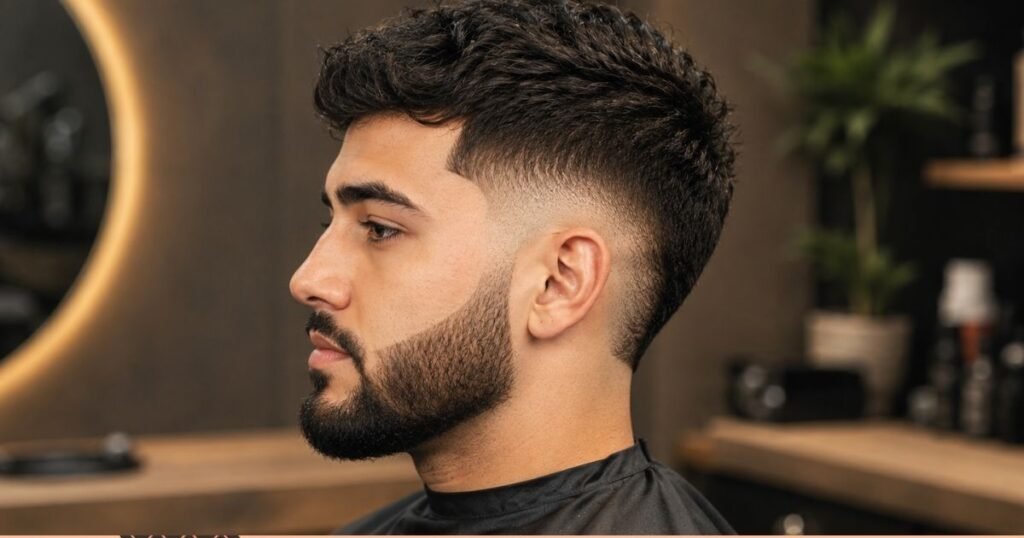
Combined with a beard, the fade will seamlessly merge into the facial hair, resulting in a well-groomed appearance. This pairing is more likely to create a defined jawline and provide a more grown-up, put-together look. Regularly trimming the beard is important to maintain a clean blend.
Straight Hair Burst Fade
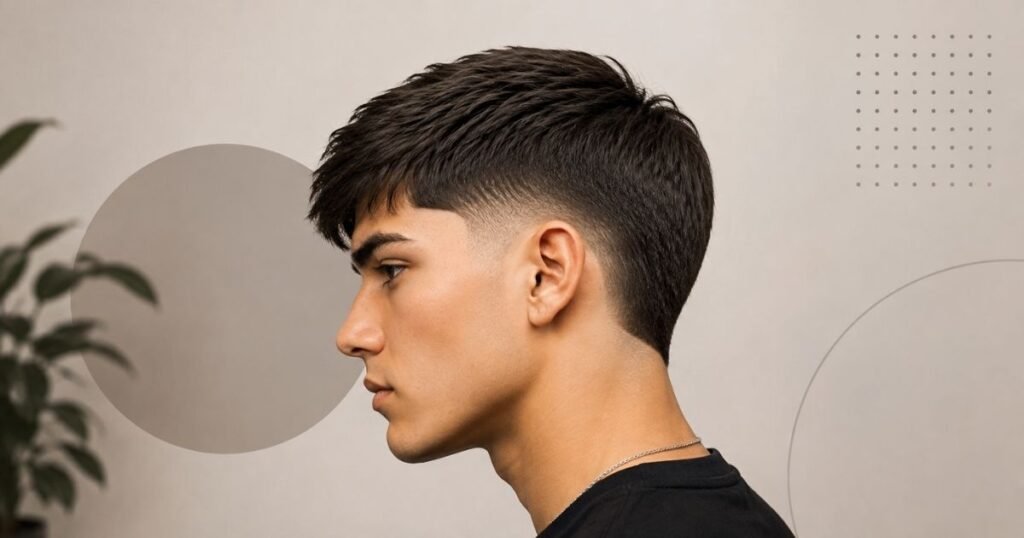
This type of hair is easy to maintain its shape, and the fade will appear more crisp and defined on straight hair. It complements side parts, comb-overs, and layered tops, and is a popular option for men seeking a tidy look in the workplace.
Taper Burst Fade
This is a more subtle version of the burst fade, and the fade into the skin is not as abrupt or dramatic. This is a great choice for men seeking a contemporary cut without a dramatic effect, and is suitable for everyday use.
Best Burst Fade for Your Face Shape
Picking the right burst fade for your face shape can make a noticeable difference in how balanced the haircut looks.
Round Face
A mid or high burst fade adds height and helps counter the roundness of the face. Textured tops or a mohawk style work particularly well here.
Oval Face
Oval faces are considered the most versatile shape, so low, mid, high, mullet, and mohawk versions all tend to work well.
Square Face
Since a square jaw already has strong, defined lines, a softer low or mid burst fade helps balance out the sharp angles rather than adding to them.
Diamond Face
A low burst fade paired with a bit more volume on top helps reduce width around the cheekbones and creates better overall proportion.
Long Face
For a long face, a low burst fade with medium length on top helps maintain balance. Adding too much height with a high fade can make the face appear longer than it is.
Burst Fade vs Drop Fade
The two styles are frequently confused, as both are curved around the back of the head, but are not the same haircut.
The fade, which circles around the ear in a fuller, rounder arc, is almost like a sunburst shape, and the hair on top can flow down towards the neckline. It looks particularly good with mohawks, mullets, and textured tops.
A drop fade, however, is a fade that drops behind the ear rather than curves out, and follows the natural curve of the skull. It provides a more refined and streamlined appearance and is generally more suitable for men who prefer a subtle touch rather than a dramatic effect.
The burst fade is typically the preferred option if you’re looking for something a little more interesting and contrasting. The drop fade might be a better option if you want something simple and versatile.
Pros and Cons of a Burst Fade
| Pros | Cons |
|---|---|
| Works with straight, curly, wavy, and thick hair | Needs a touch-up roughly every two to three weeks |
| Gives a sharp, modern appearance | High and skin versions may not suit strict office settings |
| Complements mullets, mohawks, and textured tops | Not the best fit for men with thinning hair on the sides |
| Can be adjusted to low, mid, high, or skin | Requires a skilled barber to get the curve clean |
| Adds shape and volume at the back | Higher contrast versions expose the scalp more easily |
| Suitable for teens, adults, and kids | Not ideal for very long face shapes in the higher versions |
How to Style and Maintain a Burst Fade
Most of the burst fades are of short to medium duration, which means the right product selection is important.
Styling powder provides texture and a matte finish, ideal for casual and everyday styles.
Hair wax provides good hold and a little shine, which is great for both sleek and textured styles.
Matte clay works well for textured tops that require volume but don’t want to appear greasy.
Regular trims are more important than product. The fade is trimmed close to the skin near the ears, so it grows back quicker than longer cuts. Most men get a touch-up every two to three weeks, although if they get a low burst, sometimes the interval is a bit longer.
How Much Does a Burst Fade Cost
Pricing depends heavily on location and the barbershop, but here is a general range you can expect:
- United States: around $20 to $45
- United Kingdom: around £15 to £30
- Australia: around $25 to $55
Prices tend to run higher in larger cities and at barbershops known for detailed fade work, since a clean burst fade requires more skill and time than a basic haircut.
How to Ask Your Barber for a Burst Fade
Getting the result you want largely comes down to how clearly you communicate with your barber. Vague instructions like just saying “burst fade” often lead to a haircut that technically qualifies but does not actually suit your head shape or hair type.
Here is a simple approach that works well:
- Say clearly that you want a burst fade around the ears, not just a regular fade
- Specify the height you want: low, mid, or high
- Mention whether you want it taken to the skin or kept at a short guard
- Describe your preferred top style, whether that is curly, textured, or a mullet
- If you have a beard, ask for it to be blended smoothly into the fade
- Bring a reference photo so there is no confusion about the exact look
A good barber will also ask how tight you want the curve near the ear and how much weight you want left above the fade line. Answering these questions clearly helps avoid a haircut that looks hollow or uneven once it grows out slightly.
Who Should Avoid a Burst Fade
The burst fade is a type of fade that works for many people, but it isn’t for everyone.
Some men may experience balding around the sides that reveals more skin than they would prefer. The higher fade options should be avoided by people with very long faces, as it can make the face look longer. A high or skin burst fade may not be suitable in a very strict, conservative professional setting, but a low fade may be suitable. If going to the barber every few weeks isn’t in the cards for you, a lower-maintenance haircut may be more for your lifestyle.
Conclusion
The burst fade haircut is a popular haircut for a reason. It provides a neat cut that can also be styled in a variety of ways, from a mullet to a mohawk to just letting your natural hair fall over. The best way to achieve this haircut is to find a face cut that complements your face shape, communicate effectively with your barber, and keep up with regular haircuts.
So, if you’re giving it a try for the first time or if you’re looking to replace your standard fade, the burst fade is a solid option that can be easily used in 2026.
Frequently Asked Questions
What does a “burst fade” haircut entail?
A burst fade is a fade that is done around the sides of the head in a curved and rounded shape around the ear line, not straight, and more length is left at the back of the head.
In 2026, is the burst fade still in vogue?
Yes. It is still one of the most popular barbershop fades requested, especially among teens and young men, and it is still a great combination with popular styles such as mullets and textured crops.
What is the difference between a burst fade and a regular fade?
A regular fade is a straight or slightly curved line around the entire head, while a burst fade is a fuller and more rounded fade around the ear, with more length at the neckline.
When should I have a burst fade redone?
Most men require a touch-up every 2-3 weeks, as regrowth is visible quickly in high or skin versions.
Can a blow-out style be used on curly hair?
Yes. Actually, curly hair is a great fit for a burst fade, as the clean sides will accentuate the natural texture and volume on top.